
When you hear the term ‘bespoke suit’, you're hearing about the absolute pinnacle of tailoring. This is where a garment is built entirely from scratch, for one person and one person only. It's a world away from made-to-measure or off-the-rack suits, involving a unique paper pattern cut just for you and a series of fittings to achieve a truly flawless result. Think of it as an investment in unparalleled craftsmanship and a style that will last a lifetime.
Key Takeaways
- True Bespoke Defined: A genuine bespoke suit starts with a unique paper pattern drafted from scratch for an individual, involving multiple fittings to sculpt the garment to the body. It requires significant handwork, often over 50 hours.
- Unmatched Fit and Personalisation: The core benefits are a perfect fit that accommodates your unique posture and proportions, and complete control over every detail, from fabric and lining to lapel style and buttons.
- A Collaborative Process: Commissioning a bespoke suit is a partnership with your tailor. The journey typically takes 8-12 weeks and includes an initial consultation, meticulous measurements, and a series of basted, forward, and finish fittings.
- Long-Term Investment: While the initial cost is higher than off-the-rack, a bespoke suit is built for longevity using superior materials and construction (like a full canvas), making it a durable and sustainable wardrobe cornerstone.
What to Expect from This Guide
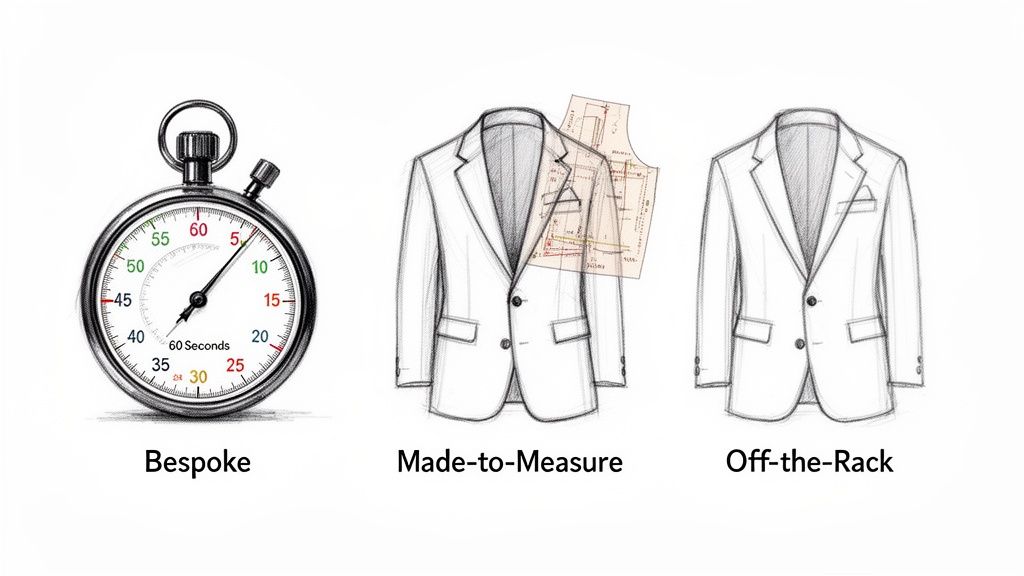
Dipping your toes into the world of high-end tailoring can feel a little daunting, but the key differences are actually quite straightforward. The term ‘bespoke’ has its roots in the days when a piece of cloth was literally "spoken for"—reserved exclusively by a client for their commission. Today, that word signifies the highest possible standard in custom clothing.
This guide is here to demystify the entire journey. We want to give you a clear roadmap, from that first chat with a tailor to the final fitting, so you feel confident and clued-up every step of the way. You won’t just learn what a bespoke suit is; you'll understand why it offers a value that goes far beyond the price tag.
Core Concepts at a Glance
To kick things off, let's nail down the fundamental benefits that set a bespoke garment apart. The best way to think of it is commissioning a piece of functional art, shaped perfectly to your body and your lifestyle.
- An Unmatched Fit: A bespoke suit is sculpted to your unique posture and proportions. It’s a level of precision that even a heavily altered off-the-rack garment can never truly replicate.
- Total Personalisation: Every single detail is your call. From the cloth and lining to the style of the lapels, the button configuration, and the angle of the pockets, you create a suit that is unequivocally yours.
- Superior Craftsmanship: The quality of the construction, especially the hand-finishing, ensures the garment not only looks exceptional but is also built to last for decades.
This process is a genuine collaboration between you and your tailor. To start getting a feel for your options, our guide on finding the right bespoke suit shops near me is a great place to begin. As we move through this article, we’ll dive deeper into each of these elements, giving you the complete picture of what it’s like to commission your first bespoke piece.
What Defines a True Bespoke Suit?
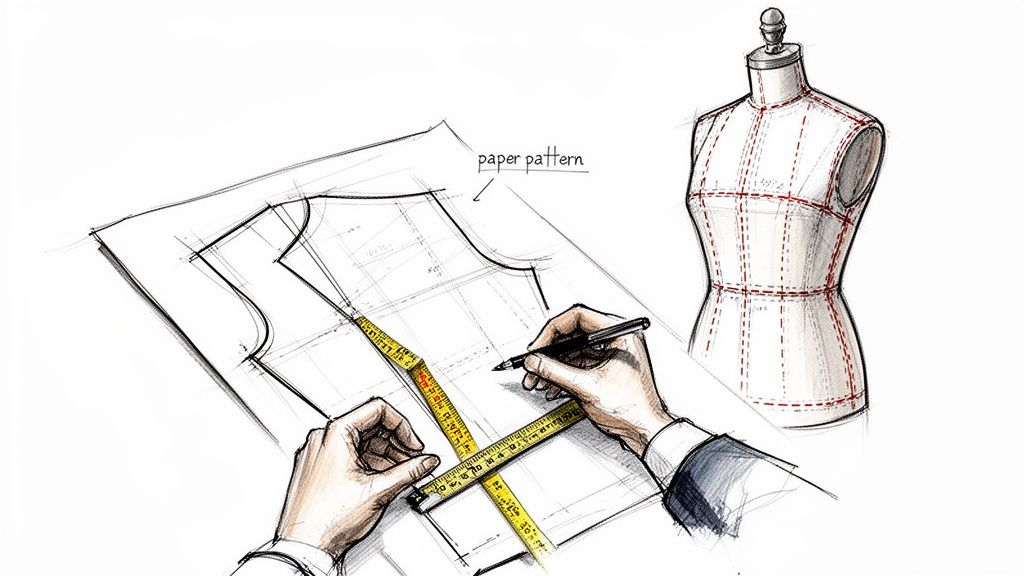
The word ‘bespoke’ gets thrown around quite a lot these days, but its true meaning is deeply rooted in pure artisanship. It's a philosophy, really. It means creating something entirely from scratch for one person, a world away from simply altering a pre-existing garment to fit better. This commitment to creation, not adaptation, is what makes a true bespoke experience entirely unique.
For a long time, the term was used so loosely it started to lose its meaning. That all changed in 2004 when the Savile Row Bespoke Association was formed. They drew a line in the sand, establishing strict standards—like requiring a minimum of 50 hours of handwork in every suit—to protect and promote this incredible craft around the world.
That heritage of uncompromising quality is the very foundation of the process. When you commission a bespoke suit, you’re not just buying clothes; you're taking part in a tradition that has been upheld for generations.
The Heart of the Craft: The Paper Pattern
If there’s one single thing that defines a genuine bespoke suit, it's the creation of a unique paper pattern. This isn't some standard template that we tweak to your size. It’s a pattern drafted entirely from scratch, using dozens of measurements taken by your tailor.
Think of this pattern as a two-dimensional blueprint of your body. It captures everything—not just your chest and waist, but the subtle details like the slope of your shoulders, your posture, and the natural arch of your back. It’s a technical work of art that is yours and yours alone.
A bespoke pattern is the tailor's architectural drawing. It ensures the final garment is not just worn by you but is built around you, accommodating every unique contour for a fit that feels like a second skin.
This is the fundamental step that separates bespoke from its closest cousin, made-to-measure. While both offer a degree of customisation, only bespoke begins with a blank sheet of paper. To get a better sense of these crucial distinctions, take a look at our detailed guide on made-to-measure vs bespoke suits.
Sculpting the Suit: A Series of Fittings
A bespoke suit isn't made and then fitted at the end. It's sculpted directly on your body over a series of crucial appointments. This back-and-forth process is absolutely essential to achieving that perfect, unparalleled result.
Each fitting allows the tailor to see how the cloth hangs, moves, and drapes on you in real life—making tiny, intuitive adjustments that a measuring tape could never predict.
The Basted Fitting: This is your first glimpse of the suit in its most basic form. It's loosely stitched together with white basting thread, looking more like a skeleton of a garment. Here, the tailor checks the core balance, lengths, and proportions, making big-picture changes before any permanent stitches are made.
The Forward Fitting: By this point, the suit looks much more complete. The sleeves are usually attached, and the tailor begins refining the silhouette—adjusting the collar, shaping the lapels, and nipping the waist to create the final desired shape.
The Finish Fitting: This is the final check before you take your suit home. It’s almost entirely finished, with details like buttonholes and linings in place. We use this fitting for any final, minor tweaks to ensure every single element is absolutely spot on.
The artisan's eye and experienced hand are what guide this entire journey. And while we're talking about suits, these principles of custom creation are universal; you can see a similar dedication in the ultimate craftsmanship of bespoke garments like footwear. Ultimately, it’s this close collaboration between you and your tailor that transforms a piece of cloth into a true extension of your personal style.
The Real Benefits of a Bespoke Garment
Choosing a bespoke garment is about so much more than simply buying a new suit. It’s an investment, a creative process, and a decision that fundamentally changes how you feel about the clothes you wear. The advantages go far beyond the cloth itself, touching on everything from personal expression and perfect comfort to enduring quality.
The most immediate and profound benefit is, without question, the perfect fit. An off-the-rack suit is cut for a standardised, averaged-out figure—a person who, in reality, doesn’t exist. A bespoke garment, on the other hand, is sculpted to your body’s unique architecture. It accounts for everything, from the specific slope of your shoulders to your natural posture.
This meticulous process means the suit moves with you, not against you, providing a level of comfort and confidence that a ready-to-wear alternative could never hope to match. It’s the difference between just wearing a suit and having it feel like a natural extension of yourself.
Complete Personalisation and Self-Expression
Beyond that flawless fit, commissioning a suits bespoke piece places you firmly in the creative director's chair. You are in control of every single detail, transforming the garment into a true reflection of your personality and style. This is where the magic really happens.
Your journey begins with the cloth. You get to choose from the finest British fabrics, whether you're drawn to the rugged texture of a classic tweed, the soft luxury of cashmere, or the breezy lightness of linen. The UK's tailoring scene is a massive player in the global custom apparel boom; in fact, the nation contributes to the production of over 7 million tailored suits each year. That's a testament to its manufacturing excellence in a market valued at a staggering $42.3 billion. You can discover more insights about the global men's suit market on marketreportsworld.com.
From there, the personalisation continues with every element:
- Lapel Style: Will it be a classic notch, a more formal peak, or a relaxed shawl lapel?
- Buttons: You decide the material, the colour, and the configuration—from a sharp single button to a traditional double-breasted arrangement.
- Lining: This is your chance to add a hidden pop of personality, perhaps a vibrant colour or a subtle, sophisticated pattern.
- Pockets: Specify the style, whether it’s sleek jetted pockets, classic flaps, or a more casual patch pocket.
Longevity and Enduring Value
Finally, one of the most crucial benefits is the exceptional longevity and value a bespoke suit provides. Unlike mass-produced garments designed for a single season, a bespoke piece is built to last for decades. The quality of the materials and the meticulous hand-stitching mean it will withstand the test of time beautifully.
A bespoke suit is not a disposable purchase; it is a long-term investment in your personal brand. With proper care, it will outlast countless off-the-rack alternatives, becoming a cherished cornerstone of your wardrobe.
This durability also makes it a far more sustainable and, over its lifetime, more cost-effective choice. The seams even include extra material, allowing the suit to be let out or taken in as your body changes over the years. This adaptability ensures your investment continues to pay dividends, always looking and feeling impeccable, and remaining a powerful tool for self-expression for years to come.
Navigating the Bespoke Commissioning Process
Stepping into the world of bespoke is an experience unlike any other. It’s not just about buying a suit; it’s a creative partnership, a conversation between you and your tailor that unfolds over several meticulously planned stages. This is a deliberate, unhurried process designed to ensure every single detail aligns perfectly with your vision and your physique.
Forget the instant fix of an off-the-rack purchase. A bespoke commission is a journey rooted in precision and patience, a true respect for the craft. We're building a garment that is yours and yours alone, from the very first chat to the final, perfect stitch.
The Initial Consultation: A Conversation About Style
Your journey doesn't begin with a tape measure. It begins with a conversation. This first meeting is arguably the most crucial step, as it lays the entire foundation for the suit we’ll create together. We'll talk about your lifestyle, what the suit is for, and what makes you tick, stylistically speaking.
This is your moment to share your ideas. Is this suit for a wedding? A pivotal business meeting? Or is it simply about elevating your daily wardrobe? Your tailor will act as your guide, walking you through a vast library of cloth swatches to help you find a fabric that feels right for both the occasion and your personal taste. It's this collaborative spirit that guarantees the finished suit is a genuine reflection of you.
This infographic captures the heart of the bespoke journey—connecting that perfect fit with your personal style to create lasting value.
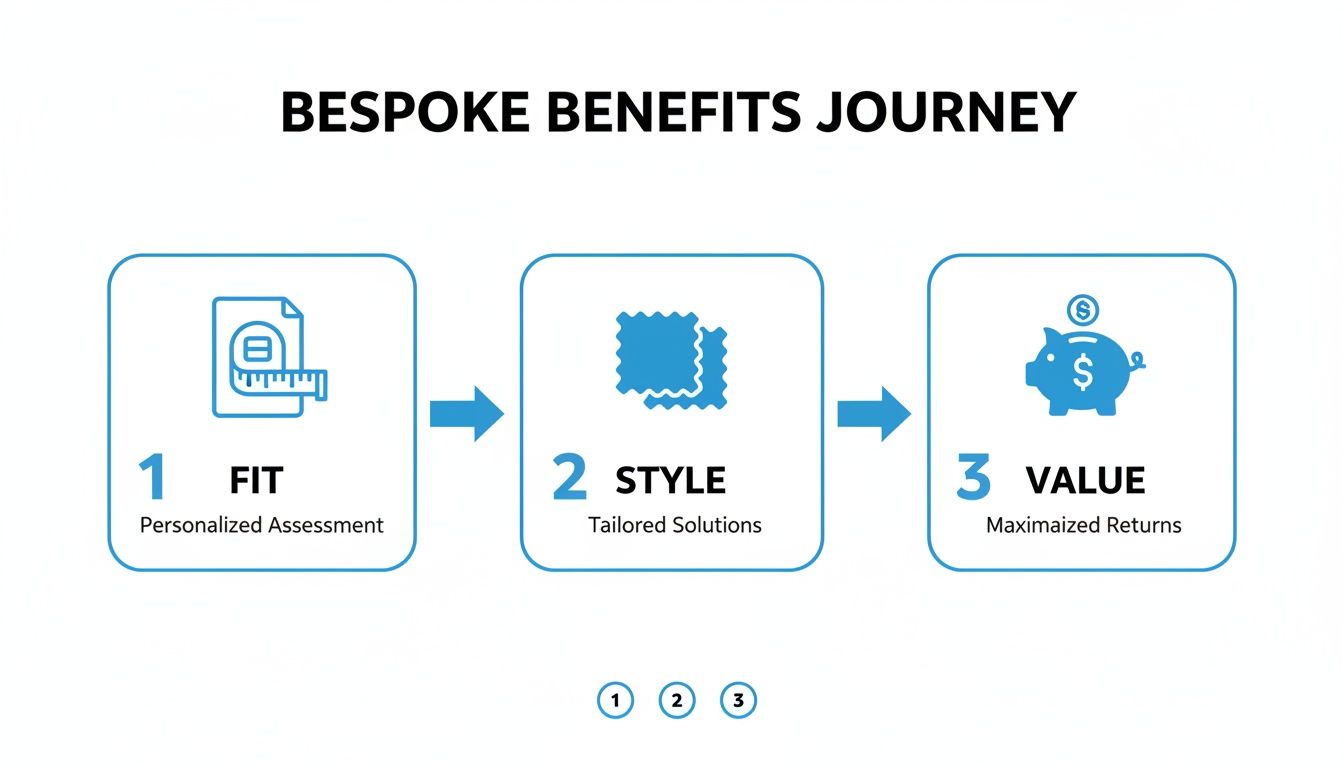
As you can see, each stage builds on the one before it, ensuring the final piece isn't just a product, but a solution tailored to you.
Meticulous Measurements and Pattern Drafting
Once we’ve settled on the design and cloth, your tailor will take a comprehensive set of measurements—often more than 20 different points. This goes far beyond a simple chest and waist reading; it’s about capturing the unique landscape of your body, from the slope of your shoulders to your natural posture and stance. It's these nuances that create a truly three-dimensional fit.
From these precise measurements, a master craftsman drafts your unique paper pattern entirely from scratch. This isn't a template we adjust; it's your personal blueprint, belonging only to you. This is the very essence of bespoke—building a suit around your body, not just altering one to it.
The patience required in the bespoke process is not a delay; it is an essential ingredient. True craftsmanship cannot be rushed, and this deliberate pace is what guarantees a result of exceptional quality and fit.
The Fitting Sequence: Sculpting the Garment
With the pattern cut and the cloth prepared, the suit is loosely assembled for a series of fittings. This is where the artistry truly comes to life, as the garment is quite literally sculpted on your body.
- The Basted Fitting: The suit is temporarily stitched together using white basting thread. This "skeleton" fitting is our first chance to check the fundamental balance, lengths, and proportions, allowing the tailor to make foundational changes before any permanent seams are sewn.
- The Forward Fitting: At this point, the suit is looking much more like its final self, with sleeves set and pockets in place. The tailor's focus shifts to refining the silhouette—shaping the lapels, setting the collar just so, and making sure the garment drapes perfectly as you stand and move.
- The Finish Fitting: This is the final check when the suit is nearly complete. Linings are in, buttonholes are stitched, and it’s all about making those last, tiny tweaks to ensure every detail is absolutely perfect before you take your creation home.
The entire process, from that first conversation to collecting your finished suit, typically takes between 8 and 12 weeks. This timeline is a hallmark of genuine bespoke tailoring, allowing the necessary time for meticulous handwork and the crucial sequence of fittings. This commitment to the craft is what transforms a simple piece of cloth into an enduring garment you will treasure for years.
If you're ready to explore your own options, you can begin to design a suit with us online to see what's possible.
The Heart of the Suit: Cloth, Construction, and Cost
When you embark on the bespoke journey, two of the most critical decisions you'll make are about the cloth and the internal construction of your suit. These choices do more than just define how the garment looks and feels; they are the very foundation of its character and its cost. Think of them as the core ingredients that separate a good suit from a truly exceptional one.
The fabric is the soul of your suit. It dictates its drape, how comfortable it is to wear, and whether it’s right for a summer wedding or a winter board meeting. We work with some incredible British cloths, for instance, each with a rich heritage of quality and character that you can feel between your fingers.
This is exactly why that initial consultation is so vital. It’s your chance to actually handle the fabrics, feel their weight, and understand their unique properties. That tactile experience is everything when it comes to making a choice you’ll love for years to come.
Choosing the Right Fabric for You
Picking the perfect material is a deeply personal decision. A fine British wool, for example, is a versatile workhorse—it's durable, breathable, and just right for the UK's year-round climate. It holds its shape beautifully, which makes it a fantastic starting point for a first suits bespoke commission.
For more specific needs, though, other cloths really come into their own:
- Tweed: Famous for its rugged texture and warmth, tweed is the undisputed king for a durable, classic country suit or a sharp winter look.
- Linen: At the other end of the spectrum, linen is incredibly lightweight and breathable, making it the perfect choice for summer weddings or events in warmer climes.
- Cashmere and Mohair: Blends that include these luxurious fibres offer a beautiful sheen and a soft handle, adding a real touch of refinement to formalwear.
Getting to grips with these differences is the key to building a wardrobe that's both functional and stylish. For a deeper dive, our guide to the best fabrics for suits is a great place to explore their unique qualities.
The Inner Workings: Full Canvas vs Half Canvas
Beneath that beautiful outer fabric lies the suit's internal structure, known as the canvas. This is a layer of material, traditionally a blend of horsehair and wool, that sits between the cloth and the lining. Its job is to help the jacket mould to your body over time and give it the proper shape and drape.
A full-canvas construction is the gold standard in bespoke tailoring, no question. The canvas runs all the way from the shoulder down to the hem of the jacket. This allows the garment to move with you, creating a fluid, natural silhouette that genuinely gets better with every wear. It’s more labour-intensive, but the result is superior longevity and a far more comfortable fit.
A half-canvas construction, where the canvas extends only through the chest and lapel, is a less expensive but still high-quality alternative. It provides good structure where it’s needed most, but it just doesn't have the full drape and moulding capabilities of its full-canvas counterpart.
The internal canvas is the suit’s skeleton. A full-canvas construction allows the jacket to become a second skin, adapting and shaping to your body over time—a true hallmark of bespoke craftsmanship.
Deconstructing the Price of a Bespoke Suit
Understanding the price of a bespoke suit is really about seeing it as a direct reflection of materials, skill, and time. Britain's bespoke market is a leader in Europe, commanding a significant portion of the industry and driving a sector poised for strong growth. You can see more insights about the bespoke suit market on dataintelo.com.
The final cost is a transparent sum of its parts:
- The Cloth: A rare super fine wool or a unique cashmere blend will naturally cost more than a standard worsted wool. Simple as that.
- The Construction: A full-canvas build requires significantly more hours of skilled handwork than a half-canvas option, and that's reflected in the price.
- Design Complexity: Intricate details like hand-stitched buttonholes, complex pocket styles, or unique patterns all require extra time and artistry from the tailor.
- Artisan Labour: The price directly accounts for the 50+ hours of an expert tailor's time spent drafting, cutting, fitting, and finishing your garment entirely by hand.
When you look at it this way, the cost is no longer just an expense. It becomes a clear and worthwhile investment in unparalleled quality, a perfect fit, and a garment that's truly built to last a lifetime.
About the Author: Igor, Founder of Dandylion Style
Igor is the founder and master tailor behind Dandylion Style. With years of dedicated experience in gentlemen's tailoring, he has cultivated a deep appreciation for the artistry and heritage of the craft. His philosophy is rooted in a calm, collaborative process, guiding clients through the selection of fine British fabrics to create garments that are a true extension of their personality. Igor's passion lies not just in the technical skill of tailoring but in building a relationship of trust, ensuring every client's vision is realised with precision and care.
Frequently Asked Questions About Bespoke Suits
How long does the bespoke process take?
A true bespoke suit cannot be rushed. From your initial consultation to the final fitting, the entire process typically takes between 8 and 12 weeks. This timeframe is essential to allow for the meticulous handwork involved, from drafting your unique paper pattern to conducting a series of fittings. Each stage, especially the fittings where the suit is sculpted to your body, requires patience and precision. This deliberate pace is a hallmark of genuine craftsmanship and ensures a flawless, long-lasting garment you will treasure.
What is the main difference between bespoke and made-to-measure?
The key distinction lies in the pattern. A bespoke suit begins with a completely new paper pattern drafted from scratch, based on dozens of your specific measurements. This allows for unlimited customisation. In contrast, a made-to-measure suit starts with a pre-existing standard pattern, which is then adjusted to your measurements. While a significant improvement on off-the-rack, it doesn't offer the same granular control or the multiple fitting stages that define the truly personalised, sculpted fit of a bespoke garment.
How much should I expect to pay for a bespoke suit?
The cost of a bespoke suit directly reflects the exceptional materials, skill, and time invested in its creation. A two-piece bespoke suit from a reputable tailor generally starts around £1,500, but this can vary. The final price is influenced by your choice of cloth—rarer fabrics like cashmere or high-performance wools will increase the cost—and the complexity of the design. During your consultation, all costs should be transparently explained, ensuring you understand the value behind your long-term investment in quality.
How should I care for my bespoke suit?
Proper care is vital for ensuring your bespoke suit lasts a lifetime. Always hang it on a wide, shaped wooden hanger to support the shoulders and maintain its structure. Allow the suit to rest for at least a day between wears, letting the natural fibres recover. Avoid frequent dry cleaning; instead, spot-clean minor stains and use a high-quality clothes brush to remove dust. A gentle steaming can remove wrinkles. Professional cleaning should only be necessary once or twice a year at most.
What happens if I lose or gain weight?
One of the greatest advantages of a bespoke suit is its adaptability. A skilled tailor will build extra material, known as an 'inlay', into the seams of the garment during its construction. This foresight allows the suit to be expertly let out or taken in as your body changes over the years. It ensures your investment continues to fit you perfectly for decades, making your bespoke suit a truly sustainable and valuable piece in your wardrobe, unlike its off-the-rack counterparts.
Ready to begin your own bespoke journey? At Dandylion Style, Igor is ready to guide you through a calm, considered process to create a garment that is unequivocally yours. Book your no-obligation consultation today.