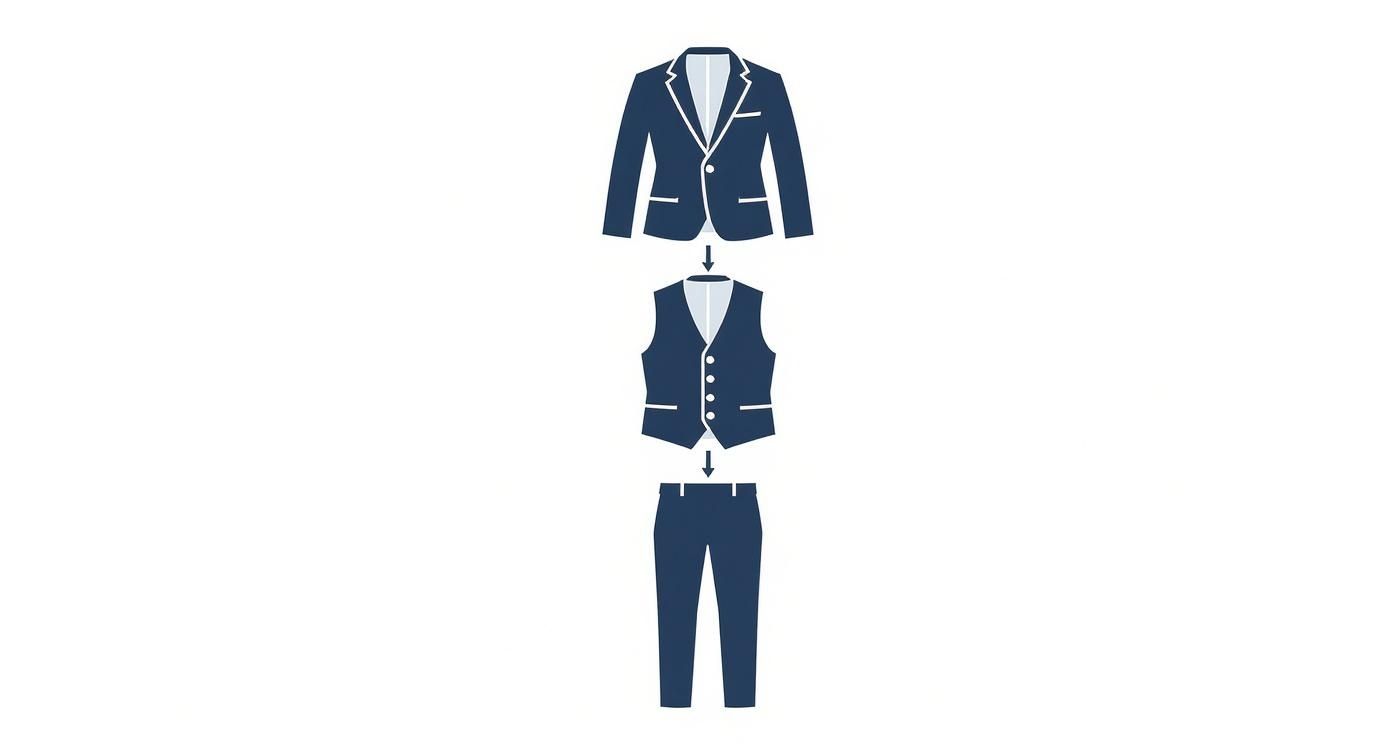
At its heart, a suit is built from three core pieces: the jacket, the trousers, and often, a waistcoat. But to leave it there would be like describing a car as just an engine and four wheels.
Each of these components has its own distinct anatomy, with elements like the lapels on a jacket or the pleats on trousers defining its character, formality, and overall style. Getting to grips with these fundamentals is the first real step toward appreciating what makes fine tailoring an art form.
Key Takeaways
Core Components: A suit consists of a jacket, trousers, and an optional waistcoat, each with distinct parts that define its style.
Jacket Details Matter: The jacket's lapels (notch, peak, shawl), shoulder construction (structured vs. natural), and canvas (full, half, fused) determine its formality and quality.
Trouser Fundamentals: The rise, choice between pleats and a flat front, and waistband style (belt loops vs. side-adjusters) are crucial for comfort and silhouette.
Waistcoat Elegance: A waistcoat elevates a suit to a three-piece ensemble, with single-breasted and double-breasted styles offering different levels of formality. Fit is paramount, ensuring it covers the trouser waistband.
Context is Key: The combination of these parts should be chosen based on the occasion, whether it's for the professional environment of a boardroom or the celebratory nature of a wedding.
A Quick Guide to Suit Anatomy
Before we dive into the finer points of bespoke construction, it’s a good idea to familiarise yourself with the basic structure of a gentleman's suit. Think of it as learning the alphabet before you start writing your style story; knowing the names for each part empowers you to communicate exactly what you want from your tailor.
The main pieces don't just exist alongside each other—they work in harmony to create a single, elegant silhouette.
This visual guide breaks down a suit into its three primary items.
This hierarchy shows how the jacket, trousers, and optional waistcoat come together to form the complete ensemble. If you want a deeper understanding of how these pieces create such a polished look, you can learn more about what a 3-piece suit means and the impact it has.
Every element plays a crucial role. Mastering their interplay is the essence of true style, and this foundation will guide our exploration of each component in much greater detail.
Decoding the Suit Jacket
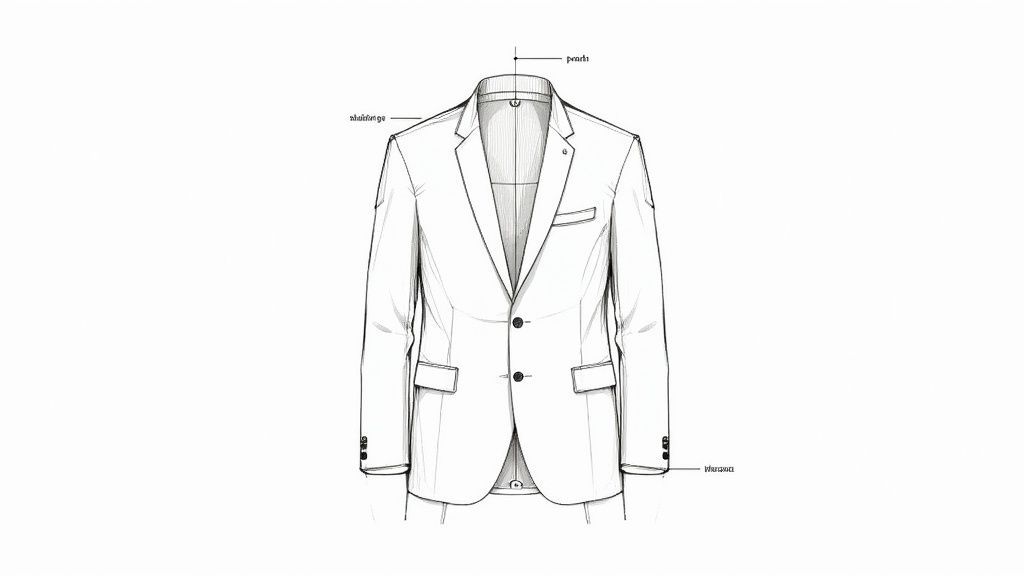
The suit jacket is the heart of any tailored ensemble. It’s what sets the tone and shapes your entire silhouette. While it’s easy to think of it as a single piece of clothing, a truly well-made jacket is a complex symphony of smaller parts all working in concert. Getting to grips with these components—from the roll of a lapel to the structure of the shoulder—is the key to appreciating fine tailoring and making choices that genuinely reflect your personal style.
Think of the jacket not just as clothing, but as architecture for the body. Every element has a job to do and an aesthetic purpose, influencing everything from how formal you look to how comfortable you feel. Let's break down the most important features you'll need to know.
The Lapel: The Face of Your Jacket
If the jacket is the heart of the suit, the lapel is its face. It's probably the most expressive part, framing your torso and drawing attention upwards. The style of the lapel is a powerful clue to the garment's intended purpose. You'll mainly come across three types.
Notch Lapel: This is the workhorse of the tailoring world. You can spot it by the triangular 'notch' cut where the collar meets the lapel. It’s the go-to for single-breasted business suits and blazers, offering a timeless, understated look that never feels out of place.
Peak Lapel: A more formal and assertive choice. The peak lapel points sharply upwards towards the shoulder, creating a strong V-shape that has the clever effect of broadening the shoulders and slimming the waist. You'll traditionally find it on double-breasted jackets, dinner jackets, and very formal morning coats.
Shawl Lapel: This is a smooth, rounded lapel with no notches or peaks at all. Its continuous, elegant curve is reserved almost exclusively for evening wear, like tuxedos and smoking jackets.
The structure of a men's suit in the UK often hinges on these details. It’s no surprise that the notch lapel is the undisputed king of business wear, accounting for approximately 70% of suit jacket lapel styles you'll find in formal retail. It’s the default choice for looking professional and put-together.
Shoulder Construction: Shaping Your Silhouette
The shoulder is the very foundation of the jacket. It defines the whole shape and dictates how the fabric drapes over your frame. A bespoke tailor will obsess over this area, because getting it right is crucial for both comfort and appearance.
There are two main schools of thought here:
Structured Shoulder: This style uses padding to build a strong, defined shoulder line. It projects a sense of authority and formality, which is why it’s a classic choice for business suits. A structured shoulder is also a fantastic tool for balancing proportions, helping to build up a naturally sloped or narrow shoulder.
Natural or Unstructured Shoulder: With little to no padding, this style simply follows the natural line of your own shoulder. It creates a much softer, more relaxed silhouette that you'll often see in Italian tailoring and on more casual jackets. The trade-off for formality is superior comfort and an effortlessly cool feel.
If you're curious about how these subtle construction choices define different types of jackets, our guide on the blazer vs suit jacket dives deeper into the details.
The Canvas: The Suit's Skeleton
Tucked away between the outer fabric and the inner lining is the canvas. This is a layer of material (traditionally a blend of horsehair and wool) that gives the jacket its shape, structure, and lifespan. The best way to think of it is as the suit's skeleton. How this part is constructed is one of the biggest clues to a jacket's quality.
"The canvas is what allows a suit to mould to your body over time. A well-made jacket doesn't just fit you on day one; it becomes a part of you with every wear, and that's the magic of a properly canvassed garment."
There are three main construction methods:
Full Canvas: This is the gold standard of tailoring. A layer of canvas runs all the way from the shoulder down to the hem. This construction allows the jacket to drape beautifully and mould to your body over the years, making it more comfortable and ensuring it lasts a lifetime.
Half Canvas: A great compromise between quality and cost. Here, the canvas extends only through the chest and lapel—the areas that need the most structure. It gives you the shape and mouldability where it counts, while keeping the lower part of the jacket lighter.
Fused: In this method, the outer fabric is essentially glued to a synthetic interlining. Fused jackets are much cheaper and faster to produce, but they often feel stiff and don't breathe well. Over time, you run the risk of the dreaded 'bubbling' effect as the glue delaminates.
Pockets: Formality and Function
Jacket pockets aren't just for stashing your phone; they're a key stylistic detail that says a lot about a suit's formality. Below is a quick table to help you see how the different lapel and vent styles stack up, too.
Jacket Lapel and Vent Styles At a Glance
Component
Style
Best For
Formality Level
Lapel
Notch
Business Suits, Blazers
Standard
Lapel
Peak
Double-Breasted, Formal Wear
High
Lapel
Shawl
Black Tie, Dinner Jackets
Very High
Vent
Single
American-style Tailoring
Casual/Standard
Vent
Double
British Tailoring, Bespoke
Standard/High
Vent
None
Italian Tailoring, Formal
High
This at-a-glance guide helps position the common choices, but the pockets you choose will also play a big role in the final look.
The most common pocket types you'll encounter are:
Flap Pockets: The most versatile and common type you'll see on business suits. The flap adds a bit of weather protection and can be tucked in for a cleaner, more streamlined look. It’s no surprise that UK retailers report that flap pockets are used in nearly 85% of off-the-rack jackets.
Jetted Pockets: These are just sleek slits in the fabric, with the pocket bag hidden inside. With no flap, they offer the most formal and minimalist appearance, making them the standard for tuxedos and dinner jackets.
Patch Pockets: Exactly what they sound like—pockets made from a separate patch of fabric sewn onto the outside of the jacket. This makes them the most casual option, perfect for sport coats, blazers, and more relaxed tailoring.
Buttons and Vents: The Finishing Touches
Finally, we have the buttons and vents—the small details that have a big impact on a jacket's fit and function. The button stance, which is the placement of the top button, affects the jacket's proportions and where it closes on your torso. A higher stance can sometimes feel a bit dated, while a lower stance is more contemporary.
Vents are the vertical slits at the back of the jacket, designed to give you more freedom of movement and prevent the fabric from creasing when you sit down.
Single Vent: A single slit right in the centre of the back, common in American-style tailoring.
Double Vent: Two slits on either side of the back, a hallmark of classic British tailoring. Double vents allow the jacket to drape cleanly over your seat when you sit or reach into your trouser pockets, offering what many consider a more flattering silhouette.
No Vents: A feature of some Italian and formal jackets, this style provides a very clean, unbroken line but can be a bit more restrictive.
In the UK, double vents are overwhelmingly preferred for their perfect blend of comfort and style, appearing in roughly 60% of formal suits sold. Each of these small details comes together to give a jacket its unique character, turning it from just a piece of clothing into a truly personal garment.
Building Your Foundation with Suit Trousers
While the jacket often steals the show, suit trousers are the unsung heroes of a truly great suit. They are the foundation of your entire silhouette, and getting the details right has a massive impact on both comfort and style. A perfectly cut pair of trousers ensures your look is cohesive and flattering from head to toe.
Trousers are much more than just fabric tubes for your legs; they're a carefully engineered part of the suit's architecture. Every element—from how high they sit on your waist to the finishing touches at the hem—works in concert to craft a specific look. Understanding these components is your first step towards building an exceptional suit.
The Rise and Fall of the Waistline
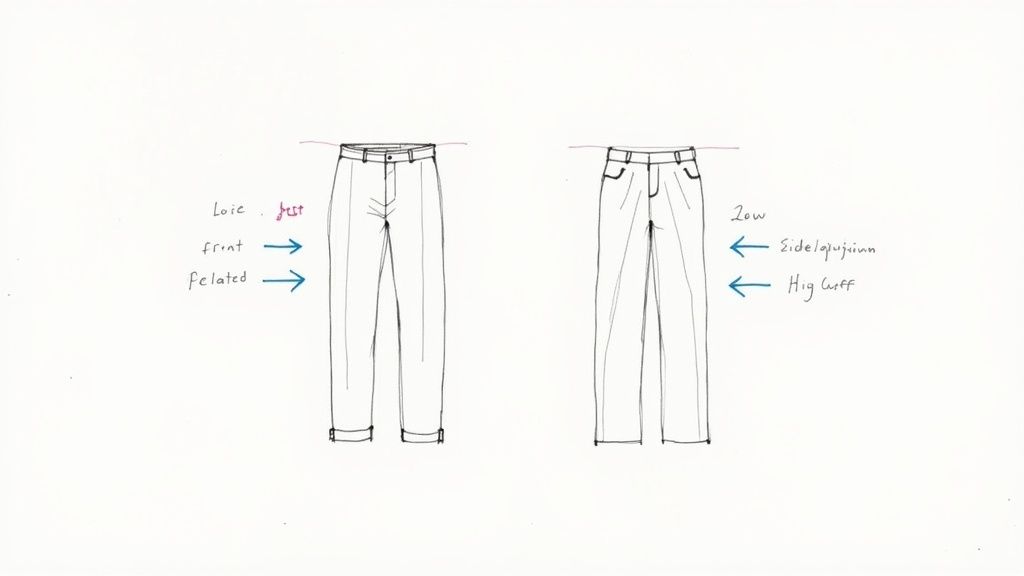
One of the most important—and most frequently overlooked—parts of a suit trouser is the rise. This is simply the measurement from the crotch seam right up to the top of the waistband, and it dictates exactly where the trousers will sit on your body.
The rise has a huge effect on your perceived proportions. A higher rise can make your legs look longer, creating a more elegant and traditional line that feels incredibly sophisticated. In contrast, a lower rise offers a more contemporary, casual feel. The right choice for you really depends on your body shape and the overall character you want the suit to have.
Pleats Versus a Flat Front
The front of your trousers presents a classic stylistic choice: will you go with pleats or a flat front? This decision is a direct line to the silhouette and formality of your entire suit.
Flat-Front Trousers: These offer a clean, modern, and slimming profile. With no extra fabric around the hips, they create a sleek line that has dominated contemporary tailoring. They're an excellent choice for leaner body types.
Pleated Trousers: Pleats are small folds of fabric stitched in at the front, just below the waistband. They provide extra room and comfort—especially when you’re sitting down—and are a true hallmark of classic tailoring. They can be single or double, with forward-facing pleats (a British tradition) or reverse pleats (more common in Italian styles).
Pleats were once the undisputed standard but fell out of favour from the 1980s onwards. They've seen a huge resurgence lately, however, as part of a return to classic, comfortable style. Today, they represent about a quarter of trouser sales in speciality UK suit stores, signalling a real comeback.
Waistband Fastenings: Belt Loops or Side Adjusters
How you keep your trousers up is another small detail that separates an off-the-rack garment from a truly bespoke creation. While belt loops are the familiar default, side-adjusters offer a far more refined alternative.
Side-adjusters provide a clean, uninterrupted line around the waist, which is the whole point of bespoke tailoring—to create a garment that fits so perfectly it doesn't need external support like a belt.
Side-adjusters are usually small button or buckle mechanisms on the hips that allow you to tweak the waistband's fit. This creates a much sleeker look and completely eliminates the hassle of finding a perfectly matched belt. If your goal is a polished and streamlined appearance, opting for side-adjusters is a superb choice. To see how these details come to life, explore our guide on made-to-measure trousers.
Finishing Touches: Cuffs and Pockets
The final details are what give your suit trousers their character. The choices you make for the hem and pocket style add that last bit of polish.
The hem can be left plain or finished with cuffs (also known as turn-ups). Cuffs add a little extra weight to the bottom of the trouser leg, helping the fabric to drape more cleanly and break perfectly over your shoes. They are a traditional feature that looks exceptionally sharp with pleated trousers and heavier cloths like flannel or tweed.
Trouser pockets vary, too. Slanted side pockets are the standard, but vertical seam pockets offer an even cleaner line. At the back, you’ll typically find jetted pockets, which may or may not feature a button closure. Each small choice subtly contributes to the final look, reinforcing the suit's overall style.
And to ensure your trousers maintain their impeccable shape for years to come, understanding the best way to hang trousers is crucial. Proper storage preserves the tailor's hard work and keeps your suit looking sharp.
The Art of the Waistcoat
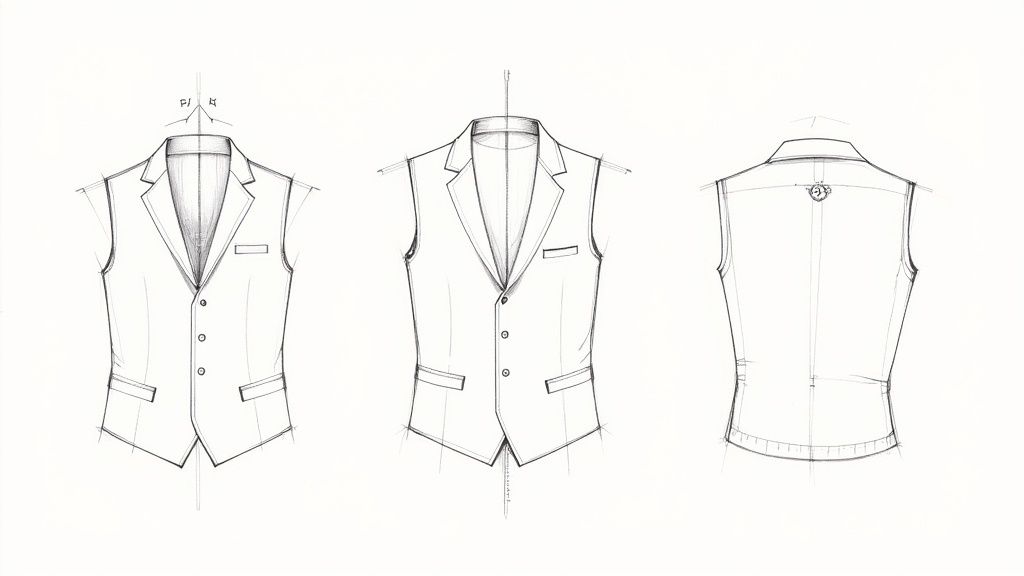
Nothing elevates a suit quite like a waistcoat. Often called a vest, this single garment is what transforms a standard two-piece into a truly elegant three-piece ensemble. It’s the anchor that pulls the whole look together, adding a layer of depth and formality that just can't be faked.
Think of it as the finishing touch. A well-fitting waistcoat creates a clean, uninterrupted line from your chest to your trousers, bridging that gap perfectly. This means that even with your jacket unbuttoned, your shirt front stays neatly covered, projecting an air of effortless polish and a genuine appreciation for the finer points of dressing well.
Single vs Double-Breasted Styles
Just like your jacket, the waistcoat comes in two main flavours: single and double-breasted. The one you choose makes a real difference to the overall tone of your outfit.
Single-Breasted: This is the classic, the go-to, the most versatile style you'll find. It features a single column of buttons—usually five or six—running down the front. A golden rule here: always leave the bottom button undone. This small gesture prevents the fabric from pulling awkwardly when you move or sit. Its clean, sharp lines make it a faultless choice for business or most formal events.
Double-Breasted: For a more formal and commanding presence, the double-breasted waistcoat is your ally. Its overlapping front panels and two columns of buttons add a fantastic layer of visual interest and structure. This makes it a superb option for a wedding or any occasion where you want your outfit to leave a lasting impression. For more ideas on how to style them, you can explore our range of bespoke waistcoats.
Getting the Fit and Details Right
A waistcoat's power is all in the fit. Get it wrong, and it can throw off the entire suit. The most important rule to remember is its length: the points at the front must be long enough to completely cover the waistband of your trousers. If a sliver of your shirt is peeking out between the two, your waistcoat is too short. Simple as that.
A properly fitted waistcoat should feel snug, hugging the body without being tight or restrictive. That little buckle on the back, known as the cinch or back adjuster, isn't just for show—it's a vital detail that lets you tighten the fabric for a perfectly tailored fit.
Beyond the fit, other details can add another layer of personality. Some waistcoats feature lapels, often echoing the shawl or peak style of the jacket, which dials up the formality. The cut of the opening, whether a deep 'V' or a higher, more traditional 'U' shape, also changes the whole look by framing your shirt and tie in different ways. It’s these small, considered choices that truly give a waistcoat its character.
Choosing the Right Suit for Any Occasion
Knowing the names of all the different parts of a suit is one thing. Knowing how to put them together for the right moment? That’s the real art. It’s this practical knowledge that transforms a man in a suit into a gentleman who truly understands what he’s wearing. Different events have their own unspoken sartorial language, and your suit needs to speak it fluently.
We'll focus on two very common, yet distinct, scenarios: the professional demands of the boardroom and the celebratory elegance of a wedding. Each one calls for a thoughtful approach to tailoring to strike precisely the right note.
Dressing for the Boardroom
In a business setting, your suit is your armour. It needs to project confidence, competence, and a quiet authority. The aim is to look sharp and professional, yet approachable—and every detail should support that message. This isn't the arena for bold experiments; instead, you rely on timeless choices that convey stability and good judgment.
Think classic and understated for your selections:
Jacket: A single-breasted jacket with notch lapels is the undisputed standard for business attire. It's clean, professional, and never out of place. A structured shoulder with subtle padding helps create a strong silhouette, while classic flap pockets strike the perfect balance between function and form.
Trousers:Flat-front trousers are the way to go. They provide a clean, modern line that’s universally appropriate. Make sure they have a medium rise for comfort and a flattering profile, finished with a plain hem for a crisp, no-fuss look.
Colour and Fabric: Stick to the foundational colours of business—navy or charcoal grey—in a versatile worsted wool.
This combination creates a look that's serious and commands respect without ever having to shout for it.
Perfecting Your Wedding Attire
A wedding is a celebration, and that gives you more room to play with personal expression and flair. While the occasion demands formality, you have the freedom to choose details that are more distinctive and elegant. Your goal is to look distinguished and celebratory, whether you’re the groom, part of the wedding party, or a guest.
For a wedding, your suit is part of the event's joyous atmosphere. Choosing more expressive details like peak lapels or a waistcoat shows you understand and respect the significance of the day.
Consider these elevated options to mark the occasion:
Jacket: A peak lapel instantly raises the formality and adds a touch of panache. It's an excellent choice for making a refined statement.
Waistcoat: A wedding is the perfect excuse to wear a three-piece suit. A well-fitted waistcoat adds a layer of sophistication that is ideal for such an important event. You can learn more about finding the right level of formality by comparing a morning suit vs a lounge suit for different wedding styles.
Trousers: Pleated trousers with side-adjusters offer both classic style and superior comfort for a long day of celebrating.
It’s this demand for high-quality, personalised attire that drives the UK's thriving custom suit market. The sector is a key part of the European market, which was projected to grow from $1.25 billion in 2021 to around $1.56 billion by 2025. By understanding these subtle differences, you can ensure you’re impeccably dressed for any significant moment.
About the Author
Igor, the founder and creative force behind Dandylion Style, is a dedicated artisan of classic gentlemen's tailoring. His passion is rooted in the belief that a suit is more than just clothing—it's a form of self-expression and a cornerstone of personal confidence. Igor combines time-honoured Savile Row craftsmanship with a modern aesthetic, ensuring every bespoke garment is a true reflection of the wearer. His expertise in the intricate parts of a suit allows him to guide clients in creating a wardrobe that is both timeless and uniquely personal.
Frequently Asked Questions
What Is the Difference Between a Notch Lapel and a Peak Lapel?
The primary difference lies in formality and shape. A notch lapel, with its triangular 'notch', is the versatile standard for business suits and everyday blazers. It is understated and universally appropriate. In contrast, a peak lapel points upwards towards the shoulder, creating a bolder, more dramatic line. This style is considered more formal and is traditionally found on double-breasted jackets, dinner jackets, and wedding suits. It conveys a greater sense of occasion and sartorial confidence, making it ideal for celebratory events.
Should My Suit Trousers Have Cuffs?
Whether your trousers should have cuffs, or 'turn-ups', is a stylistic choice rooted in tradition. Cuffs add weight to the hem, helping the fabric drape cleanly over your shoes. This detail is often seen as more traditional and pairs exceptionally well with pleated trousers and heavier fabrics like tweed or flannel. For a more modern, streamlined look, especially with flat-front trousers or slim-fit suits, a plain hem is the preferred option. Ultimately, it depends on the overall aesthetic you wish to achieve.
What Is the Purpose of Vents on a Suit Jacket?
Vents are the vertical slits at the back of a jacket, designed primarily to enhance comfort and freedom of movement. They prevent the fabric from bunching up when you sit down or place your hands in your trouser pockets, helping the jacket maintain its intended silhouette. A double vent, a hallmark of British tailoring, is often favoured as it allows for a cleaner drape across the back. A single vent is common in American styles, while a ventless jacket offers the sleekest but most restrictive fit.
Do I Have to Wear a Belt with a Suit?
No, you do not have to wear a belt. While most off-the-rack suits feature belt loops, high-quality and bespoke trousers often come with side-adjusters. These are small buckle or button tabs on the waistband that allow you to fine-tune the fit. Opting for side-adjusters creates a cleaner, uninterrupted line around your waist, enhancing the suit's streamlined and tailored appearance. If your trousers do have belt loops, however, it is generally recommended that you wear a belt for a complete look.
How Should a Waistcoat Fit?
A waistcoat should fit snugly against the body without feeling tight or restrictive. The most crucial rule is its length: the front points must be long enough to completely cover the trouser waistband, ensuring no shirt fabric is visible in between. The armholes should be cut high to prevent gaping, and the shoulders should lie flat. As a final sartorial touch, always leave the bottom button undone to prevent the fabric from pulling when you move or sit down.
At Dandylion Style, we believe a suit should be as unique as the man who wears it. If you're ready to create a garment that perfectly reflects your personal style and fits you impeccably, we invite you to begin your bespoke journey with us. Book your consultation with our master tailor today.
Written by:
Igor Srzic-Cartledge
Igor is the founder of Dandylion Style, a tailoring house built on the simple, deeply held belief that a suit should be like a second skin—a true extension of a gentleman’s personality. For Igor, tailoring isn't just about cutting cloth; it's an art form dedicated to creating unique, perfectly fitted attire for the discerning man. His passion is rooted in classic sartorial traditions, yet he maintains a keen eye for contemporary style, ensuring his creations are both timeless and relevant. This approach has cemented his reputation for genuine craftsmanship and a truly personal service.
Key Takeaways The Core Two: Navy blue and charcoal grey are the essential, non-negotiable suit colors for any professional wardrobe. Navy offers versatility and approachability, while charcoal projects authority and seriousness. Context is Crucial: The best suit color...
When you find a piece of clothing you absolutely love, getting the fit just right is the final, transformative touch. But how much should you expect to pay? In the UK, alteration costs can be as modest as £15 for a simple trouser hemming, or climb to £150 and beyond...
Getting the right pink shirt and tie combination is the mark of a well-dressed man. It’s a detail that separates the novices from those who truly understand their wardrobe. For a look that’s classic and can’t miss, pair your pink shirt with a navy, grey, or burgundy...
Key Takeaways For those seeking a quick overview, this section summarises the essential rules and recommendations for incorporating turn-up trousers into your wardrobe. Sartorial Purpose: Turn-ups add weight to the trouser hem, ensuring a cleaner, sharper drape,...
Deciding what colour tie to wear with a pink shirt is a common style query I hear from clients. For a classic, professional look that never fails, your safest and most effective choices are navy blue and charcoal grey. If you're heading to a more contemporary or...
You've just picked up a newly finished bespoke suit, and the cloth still has that clean, disciplined line only a real fitting room can give it. The temptation is to put it straight in the wardrobe and trust the label to do the rest. That's where expensive...
Book Your Tailoring Consultation
Looking for a suit or garment made specifically for you?
At Dandylion Style, we create bespoke and made-to-measure
garments tailored to your individual shape, style and occasion.
From suits and shirts to dresses, waistcoats and alterations,
our experienced tailors can help you create something truly unique.