When you're trying to figure out what to wear for an interview, here’s a rule of thumb that has never failed my clients: always aim to dress one level smarter than the company's day-to-day standard.
It’s a simple but incredibly effective strategy. This approach shows you respect the opportunity and understand the importance of professionalism, without looking like you’ve completely misjudged the company culture. Think of it this way: your attire is your first handshake. Getting it right is non-negotiable.
Key Takeaways
Dress One Level Up: A golden rule for interview attire is to dress one level smarter than the company's daily dress code. This shows respect for the opportunity without appearing out of touch with the culture.
Research is Essential: Before choosing your outfit, investigate the company's culture through their website and social media. This will help you decide between formal business, business professional, or business casual attire.
Fit is Paramount: The fit of your clothing, especially a suit, is more important than the price tag. A well-tailored outfit signals attention to detail, a crucial trait for any potential employee.
Stick to Classic Colours: For formal and professional interviews, navy blue and charcoal grey suits are the most reliable and authoritative choices. Avoid black for daytime interviews as it can appear too severe.
Details Matter: Polished shoes, a classic watch, and a smart bag complete your professional image. Grooming is equally critical—ensure your hair, facial hair, and nails are neat and tidy.
Your First Impression: A Quick Guide to Interview Attire
Long before you’ve even said "hello," your interview outfit has already started the conversation for you. It's the most powerful piece of non-verbal communication you have, signalling your professionalism, attention to detail, and genuine respect for the role you’re pursuing. In a fiercely competitive job market, this first impression can set the entire tone.
Don't just take my word for it; the numbers back it up. Recent findings on UK hiring practices reveal that employer appearance bias plays a huge role in interview outcomes. A staggering 95% of employers admitted that it factors into their hiring decisions. This isn’t just about looking sharp—it's a strategic move that shows you understand the game.
Decoding the Dress Code
To cut through the confusion, interview attire generally falls into three main categories. Getting your head around these will give you a solid foundation for building the perfect outfit.
Formal Business: This is the highest standard of dress. Think corporate law, high finance, or any C-suite executive role. It's structured, traditional, and commands authority.
Business Professional: A versatile and widely accepted standard for most corporate jobs, from management to sales. When you're in doubt, this is almost always the safest and most impressive bet.
Business Casual: Common in the tech world, creative fields, and companies with a more laid-back vibe. But don’t be fooled by the word "casual"—it still demands a polished, well-put-together look.
For a deeper dive into what is arguably the cornerstone of professional wear, our guide to the business suit offers more detailed insights to help you make the right choice.
Ultimately, your goal is to present a version of yourself that looks like you already belong in that role. If you need some personalised advice to nail your interview look, consulting a virtual fashion stylist can be a great help. A thoughtful, well-executed outfit sends a clear message: you’re a serious, capable candidate, ready to make a valuable contribution from day one.
Decoding the Company Dress Code
Before you even think about fabrics, fit, or colour, you need to put on your detective hat. The finest suit in the world can work against you if you turn up to an interview at a creative agency looking like you’ve just stepped out of a boardroom. The real goal is to read the room before you've even entered it.
Your mission is to understand the company's culture and then align your outfit with it. Or, even better, dress just one notch smarter. This isn't about guesswork; it's about a bit of essential groundwork that shifts your choice from a stab in the dark to a calculated, strategic move. Get this right, and you’ll walk in looking like you already belong.
Your Research Dossier: What to Look For
Time to start your investigation. The best clues about what men should wear to an interview are often hiding in plain sight, right on the company's own turf.
The Company Website: Head straight for the 'About Us' or 'Our Team' pages. How are the employees dressed in their photos, especially those in leadership or roles similar to yours? You're looking for patterns here. Are they all in jackets? Are ties the norm or the exception?
Social Media Channels: LinkedIn is a goldmine for this kind of intelligence. Look for photos from team away days, office events, or new hire announcements. These candid shots give you a far more honest glimpse into the day-to-day dress code than polished, professional headshots ever will.
Industry Norms: Every sector has its own baseline. Even if you can’t find specific photos, you can make a solid, educated guess based on the industry. A job in finance or law will almost always demand a more formal approach than one in digital marketing or a tech start-up.
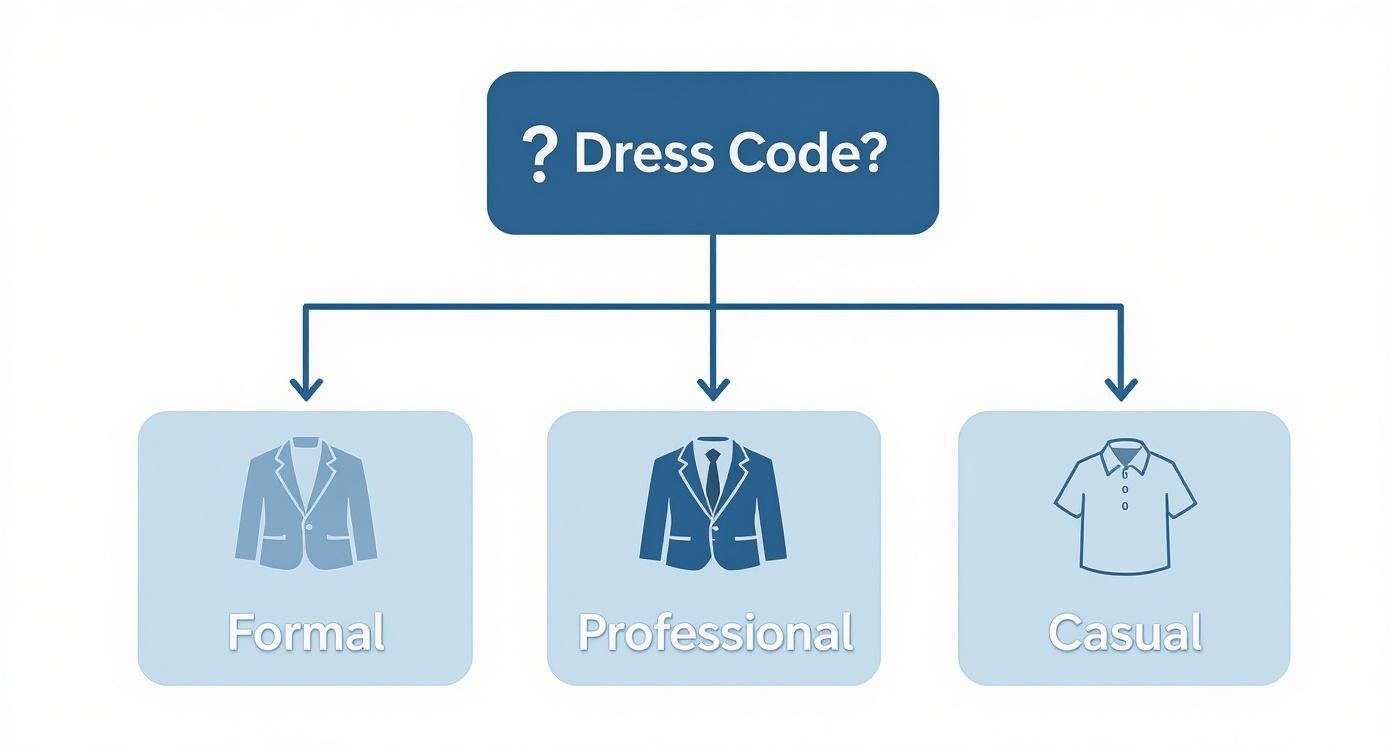
This simple decision tree can help you quickly figure out which dress code to aim for based on what you find.
As you can see, the expected attire flows directly from how formal the company environment is, pointing you towards the right category of dress.
Dressing for the Sector: The Three Tiers of Interview Attire
Once your reconnaissance is complete, you can confidently pick your outfit from one of three main categories. Each tier sends a different message, tailored to a specific professional environment.
Formal Business: The Corporate Standard
For the most traditional sectors, there’s very little room for creative interpretation. These industries—think finance, law, and senior government roles—value structure, authority, and meticulous attention to detail. Your clothing must mirror these exact qualities.
In the UK, while some dress codes have relaxed over the years, formal business attire is still the unwavering standard in these fields. For men, this means one thing: a perfectly fitted dark suit in navy or charcoal, a crisp white or light blue shirt, and a conservative silk tie. To learn more, check out these UK interview dress standards on InterviewGold.com.
Your outfit formula here is essentially non-negotiable:
A two-piece suit: Stick to the gold standards of navy or charcoal grey.
A dress shirt: Pristine white or a subtle light blue. Nothing else.
A silk tie: Choose a conservative pattern, like a quiet stripe or simple pin-dot.
Leather dress shoes: Polished black or dark brown Oxfords are essential.
Business Professional: The Versatile Default
This is the most common interview dress code you'll encounter, hitting the sweet spot for a huge range of jobs in sales, management, consulting, and even established tech firms. It projects competence and polish without the rigid formality of the full corporate uniform.
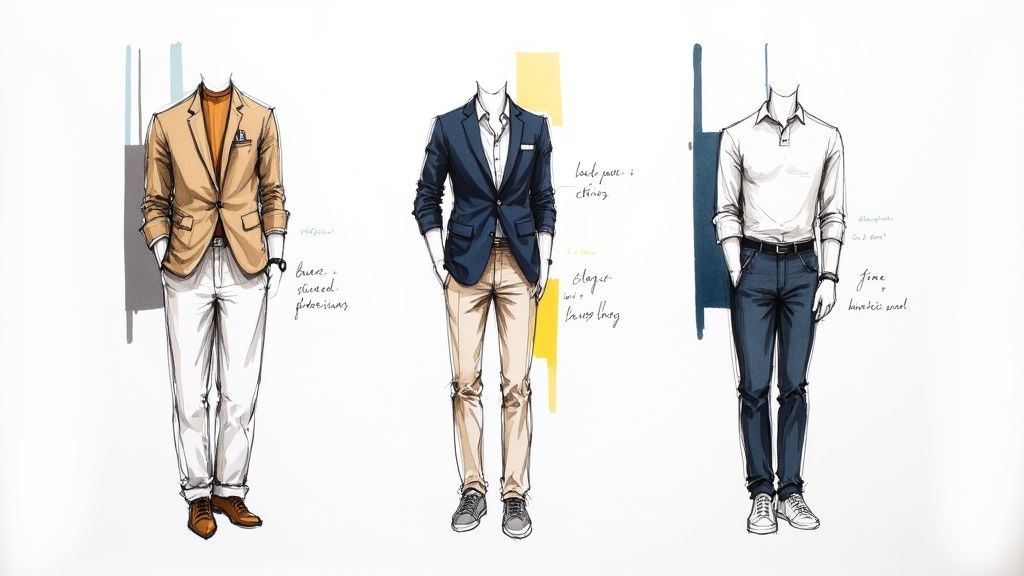
Think of it as the suit's slightly more relaxed, modern cousin. The core of the outfit is often a well-cut blazer or sports coat paired with smart trousers. This combination tells the interviewer you're serious and professional, but also adaptable and approachable.
Business Casual: The Modern Approach
This is by far the trickiest dress code to get right. It's common in start-ups, creative industries, and more laid-back tech companies, but the word "casual" is dangerously misleading. It’s a world away from what you’d wear on a Saturday afternoon.
Your goal is to look smart, creative, and effortlessly put-together. This is about showing your personality and proving you're a good cultural fit, all while maintaining a clear baseline of professionalism. A sharp blazer can still be your best friend here, but you might pair it with high-quality dark chinos instead of wool trousers. The key is refined relaxation—every single piece should be clean, fit you perfectly, and look intentional.
Mastering the Interview Suit
Even in a world where office wear is getting more and more relaxed, the classic suit is still the undisputed champion for interviews. Don't just think of it as clothes; think of it as a statement. A well-chosen suit that fits you perfectly says you’re serious, you respect the occasion, and you understand the unspoken rules of the professional world. It’s the sartorial equivalent of a firm handshake—it builds confidence before you’ve even said a word.
While the modern workplace has certainly changed, the suit's psychological punch is undeniable, especially for younger professionals eager to make their mark. In fact, a survey of UK men aged 18 to 24 found that a whopping 69% prefer wearing a suit to work, saying it makes them feel more confident and taken more seriously. This is a stark contrast to just 49% of men aged 45 to 54, which just goes to show the suit's enduring power as a symbol of ambition. You can read more about this trend in The Men's Style Report on MossBros.com.
Why Fit Is Your Greatest Asset
Let’s get one thing straight right away, a foundational rule of a gentleman’s wardrobe: fit is far more important than the price tag. An off-the-peg suit that’s been properly tailored to your frame will always look better than a thousand-pound designer suit that just hangs off you. A poorly fitting suit, no matter the cost, sends the wrong signal—it suggests a lack of attention to detail, which is the last thing you want an interviewer to think.
The aim is to create a clean, sharp silhouette that flatters your body without feeling restrictive. Here’s a quick checklist for what a great fit looks like:
Shoulders: The seam of the jacket should sit right where your natural shoulder ends. If it hangs over, the jacket's too big. If it pulls and creates a divot, it's too small. Simple as that.
Jacket Length: Stand with your arms relaxed by your sides. The bottom of the jacket should hit around the middle of your hand, just where your fingers meet your palm.
Sleeve Length: This one is crucial. The jacket sleeve should let about a quarter to a half-inch of your shirt cuff show. It’s a small detail that makes a huge difference.
Trouser Break: This is about how the trouser fabric rests on your shoes. The modern standard is a slight or "half break," where there’s just a small crease. It creates a clean, uninterrupted line from hip to ankle.
Getting these details right is everything. For a silhouette that is truly impeccable, exploring made-to-measure options can be a game-changer, ensuring every single line of the suit is crafted just for you.
Choosing the Right Colour and Fabric
Colour psychology is a subtle but powerful thing. For an interview, you want your suit to project authority, trustworthiness, and sophistication. Now, you might be tempted to grab a black suit, but it’s often best to steer clear for daytime interviews. It can come across as a bit severe or, worse, funereal.
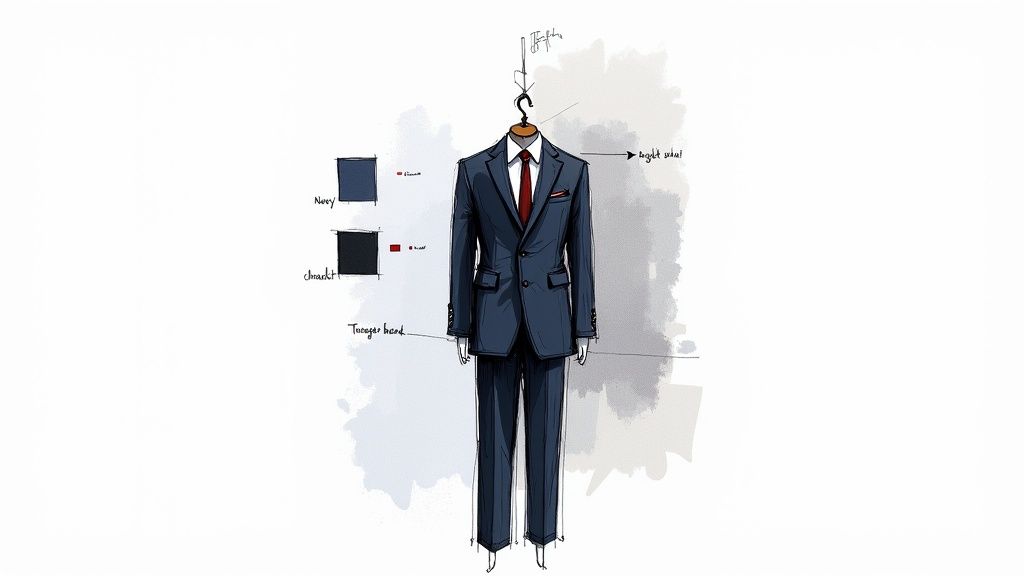
The two most reliable, versatile, and frankly best colours for an interview suit are navy blue and charcoal grey. Navy suggests confidence and approachability, while charcoal conveys maturity and professionalism. Both are classic, powerful choices that let your skills and personality do the talking.
The fabric is just as important as the colour, affecting how the suit hangs, how comfortable it is, and whether it’s right for the season.
Wool: This is the king of suit fabrics, no question. It's breathable, it's durable, and it drapes beautifully, making it perfect for year-round wear. A mid-weight worsted wool is the ideal all-rounder for pretty much any interview you’ll walk into.
Seasonal Blends: If your interview is in the warmer months, look for a wool-linen or wool-silk blend. You’ll get more breathability without all the creasing you’d get from pure linen. For winter, a flannel suit in charcoal grey not only adds warmth but also has a rich texture that looks exceptionally sharp.
By mastering the crucial elements of fit, picking a commanding colour, and understanding your fabrics, you turn a simple suit into a powerful tool. It’s not about putting on a uniform; it's about presenting the most polished, professional version of yourself—ready to land the job you deserve.
Building Outfits Beyond the Full Suit
While a full suit is the undisputed champion for the most formal interviews, the modern professional world often calls for a more nuanced play. Not every interview demands a matching two-piece, but that's certainly no excuse to let your standards slip. In fact, learning to navigate that middle ground between formal and casual is a skill in itself—it shows you’ve got your finger on the pulse of your industry.
This is exactly where the ‘business professional’ and ‘business casual’ dress codes come into their own. They allow you to project confidence and authority without looking like you’ve just stepped out of a boardroom from the 1980s. Getting it right is all about the art of combining smart separates, like a sharp blazer and well-cut trousers, to build an outfit that feels both polished and perfectly pitched for the environment.
Deconstructing Business Professional Attire
Think of the business professional look as the suit's more adaptable, modern cousin. It keeps the level of polish exceptionally high but swaps the matching jacket and trousers for thoughtfully coordinated separates. It's the perfect move for interviews in sectors like management, sales, or established tech firms where a full suit might feel a touch too rigid or out of sync with the company culture.
The absolute cornerstone of this look is a fantastic blazer or sports coat. A perfectly fitted navy or grey blazer isn't just a piece of clothing; it's the foundation of your entire outfit.
Your formula should look something like this:
A Structured Blazer: A single-breasted jacket in navy, charcoal, or perhaps a subtle check is your most reliable option.
Smart Trousers: Think well-pressed wool trousers, flannels, or even a pair of high-quality chinos in a complementary colour like grey, beige, or stone.
A Crisp Shirt: You can't go wrong with a classic white or light blue collared shirt. It's the gold standard for a reason.
Leather Shoes: A pair of polished dark brown or black Derbies or brogues anchors the entire outfit.
This approach gives you far more flexibility than a standard suit, but it does demand a sharper eye for coordinating colours and fabrics to ensure the final look is cohesive. And if you choose to go without a tie, make sure you know how to style a suit without a tie properly—it’s a deliberate style choice, not an oversight.
Demystifying Business Casual
Business casual. It’s easily the most misunderstood dress code out there, and misinterpreting it can be a costly interview mistake. Let’s be clear: it is not an invitation to wear your weekend gear. For an interview, business casual signals a more relaxed, yet still professional, standard that’s common in creative industries, start-ups, and more modern office settings.
The secret is to build your outfit from smart, individual pieces that work harmoniously together. You’re aiming for a look that feels almost effortless but is clearly intentional and well-thought-out.
Business casual is about demonstrating cultural fit without sacrificing professionalism. It's an exercise in smart layering and texture, proving you can look put-together even outside a formal structure.
This is where you can bring in more variety. Think fine-gauge knitwear, like a merino wool jumper or a smart cardigan, layered over an Oxford shirt. For certain creative roles, a pair of dark-wash, well-fitting jeans (with absolutely no rips or fading) can even work when paired with a quality blazer. When in doubt, though, always choose smart chinos or trousers over jeans. If you want to play around with combinations before the big day, you can find inspiration in an ultimate guide to virtual dressing rooms to help visualise your final look.
Business Professional vs. Business Casual: A Breakdown
To make things crystal clear, let's put these two dress codes side-by-side. This table breaks down the core differences in the context of an interview, helping you see exactly where the lines are drawn.
Attire Component
Business Professional
Business Casual
Jacket
Essential. A blazer or sports coat is required.
Recommended. A smart blazer elevates the look.
Trousers
Formal wool trousers or flannels.
High-quality chinos or smart trousers.
Shirt
Collared dress shirt (e.g., poplin).
Oxford cloth button-down or collared shirt.
Knitwear
Not typically worn.
Acceptable (e.g., merino jumper over shirt).
Tie
Optional, but often recommended.
Not required, usually omitted.
Footwear
Leather dress shoes (Oxfords, Derbies).
Loafers, brogues, or clean leather shoes.
Seeing the direct comparison helps clarify the subtle but crucial distinctions. Business professional is about structured elegance with separates, while business casual leans into smart layering and slightly more relaxed (but still sharp) pieces.
The Finishing Touches That Define Your Look
A perfectly chosen suit or blazer sets the stage, but it’s the small details that truly complete the picture. Think of your main outfit as the foundation of a house; solid, essential. The accessories and grooming are the final furnishings that turn it into an impeccably presented home.
These are the elements that show a higher level of care and self-awareness. They send a clear signal to an interviewer that you have a keen eye for detail and understand that professionalism is a complete package. Get these wrong, and you can subtly undermine an otherwise strong first impression.
Choosing the Right Accessories
Your accessories should complement, not command attention. The goal here is understated elegance that elevates your professional image.
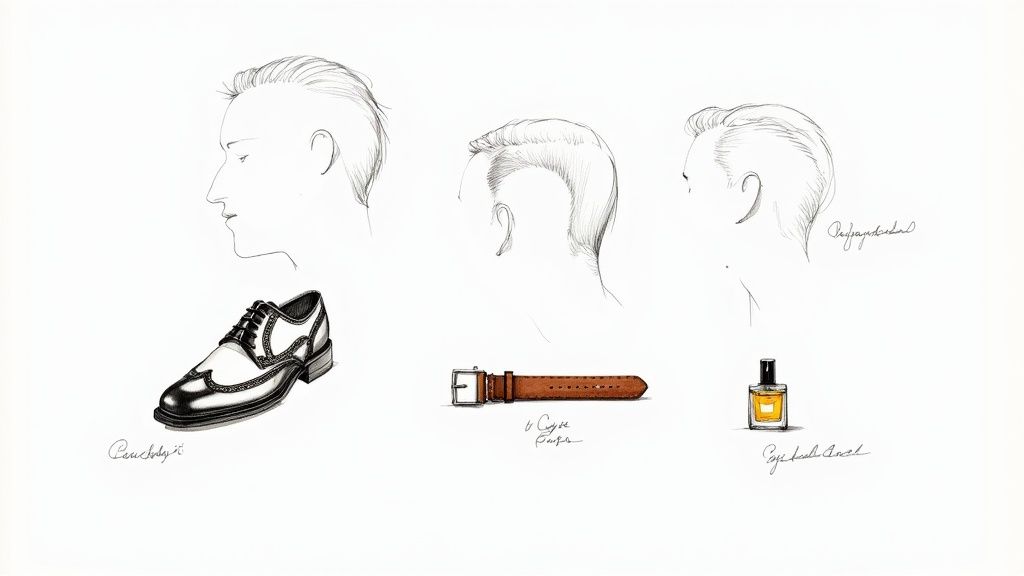
The Watch: A classic timepiece with a leather or simple metal strap is an excellent choice. It conveys punctuality and organisation. Steer clear of anything overly large, flashy, or brightly coloured. While a smartwatch on a classic face is generally acceptable these days, resist the temptation to check your notifications.
The Belt: This is a non-negotiable rule of menswear: your leather belt must always match the colour of your leather shoes. A brown belt with brown shoes, and a black belt with black shoes. It's a simple act of coordination that shows you understand the fundamentals.
The Bag: Leave the rucksack at home. You should carry your CV, portfolio, and any other documents in a smart leather portfolio or a simple, dark-coloured briefcase. It keeps you looking organised and maintains a professional silhouette from the moment you walk in.
Selecting the right pieces is crucial. For more guidance on choosing items that elevate your look, you can explore a curated collection of classic men's accessories.
Your accessories are the supporting cast for your main outfit. They should be classic, of good quality, and perfectly aligned with the professional tone you want to set. Their job is to add a final layer of polish, not to steal the show.
Impeccable Footwear
Your shoes are one of the first things an interviewer will notice, and scuffed, inappropriate footwear can instantly undo all your hard work. They really do speak volumes about your attention to detail.
For any formal or professional business interview, polished leather dress shoes are the undisputed gold standard.
Oxfords: Sleek and formal, Oxfords are arguably the most appropriate choice for a corporate interview, especially in black.
Derbies: Slightly less formal but equally smart, Derbies in dark brown or black are a versatile and completely reliable option.
Brogues: These can work well, particularly in business professional settings, but I'd suggest opting for a pair with minimal perforation to keep the look sharp and focused.
A Final Grooming Checklist
Grooming is the final, critical step that pulls everything together. It ensures that you look as sharp as your clothes.
Haircut: Get a neat trim a few days before the interview. It should look tidy and intentional, not like you rushed to the barber that morning.
Facial Hair: Your choice here should be deliberate. Either go for a clean shave or make sure your beard or moustache is neatly trimmed and shaped.
Scent: Less is always more. A single, light spritz of a subtle, classic cologne is more than enough. The interviewer shouldn't be able to smell you from across the table.
Nails: A small detail that conveys thoroughness. Make sure your fingernails are clean and trimmed.
Frequently Asked Questions About Men's Interview Attire
Is a black suit okay for an interview?
It’s best to avoid a black suit for a daytime interview. In men’s tailoring, black is traditionally reserved for formal evening wear or funerals, so it can appear overly severe or out of place in a business context. A far more sophisticated and appropriate choice would be a suit in navy blue or charcoal grey. These classic colours project authority and professionalism without the harshness of black, ensuring you make a powerful and positive first impression in any corporate setting.
Do I need to wear a tie to a job interview?
Whether you need a tie depends on the company's dress code. For a formal business interview in sectors like finance or law, a tie is non-negotiable. For business professional settings, a tie is often recommended as it adds a final layer of polish, but you can sometimes omit it. In a business casual environment, such as a tech startup or creative agency, a tie is usually unnecessary and may look overdressed. When in doubt, it’s always safer to wear one.
What kind of shoes are best for an interview?
The best shoes for a job interview are classic leather dress shoes. Dark brown or black Oxfords and Derbies are the gold standard for formal and business professional settings. They are timeless, elegant, and convey a serious, detail-oriented mindset. Make sure they are impeccably clean and polished, as scuffed footwear can undermine an otherwise perfect outfit. For more casual interviews, smart leather loafers or brogues are also acceptable, but trainers should always be avoided, regardless of the company culture.
How important is the fit of my interview suit?
The fit of your interview suit is absolutely critical—arguably more important than its price tag. An inexpensive suit that has been properly tailored to your frame will always look superior to a costly designer suit that fits poorly. A great fit signals attention to detail and professionalism. The jacket should sit cleanly on your shoulders, sleeves should show a sliver of shirt cuff, and trousers should have a slight break over your shoes. This creates a sharp, confident silhouette.
What should I wear for a video interview?
For a video interview, you should dress exactly as you would for an in-person meeting. This means wearing a full professional outfit, including trousers and smart shoes. Dressing the part helps put you in the right mindset and prevents any awkward moments if you need to stand up. Stick to solid, neutral colours like blue, grey, or white, as busy patterns can be distracting on camera. Also, test your lighting beforehand to ensure your face is clearly visible and professional.
About the Author
Igor is the founder of Dandylion Style, a London-based tailoring house dedicated to the art of bespoke and made-to-measure menswear. With a deep respect for classic craftsmanship, he established Dandylion Style to bring the unique experience of custom tailoring to the modern gentleman.
His guiding principle is that a well-made suit is far more than just clothing. It's a fundamental part of a man's personal brand—a reflection of his confidence, his attention to detail, and his understanding of how to present himself. This couldn't be more true than in an interview, where first impressions are everything.
With years of hands-on experience, Igor has personally guided countless clients, helping them build wardrobes that not only earn respect but also open professional doors. He knows firsthand that the right attire is often the first step towards success, giving every man the tools to look and feel his most capable when it matters most.
At Dandylion Style, we believe that the right attire is the first step towards professional success. If you're ready to invest in a garment that is crafted precisely for you, ensuring a perfect fit and an unforgettable first impression, we invite you to explore our bespoke and made-to-measure services. Book your consultation today.
Written by:
Igor Srzic-Cartledge
Igor is the founder of Dandylion Style, a tailoring house built on the simple, deeply held belief that a suit should be like a second skin—a true extension of a gentleman’s personality. For Igor, tailoring isn't just about cutting cloth; it's an art form dedicated to creating unique, perfectly fitted attire for the discerning man. His passion is rooted in classic sartorial traditions, yet he maintains a keen eye for contemporary style, ensuring his creations are both timeless and relevant. This approach has cemented his reputation for genuine craftsmanship and a truly personal service.
Key Takeaways The Core Two: Navy blue and charcoal grey are the essential, non-negotiable suit colors for any professional wardrobe. Navy offers versatility and approachability, while charcoal projects authority and seriousness. Context is Crucial: The best suit color...
When you find a piece of clothing you absolutely love, getting the fit just right is the final, transformative touch. But how much should you expect to pay? In the UK, alteration costs can be as modest as £15 for a simple trouser hemming, or climb to £150 and beyond...
Getting the right pink shirt and tie combination is the mark of a well-dressed man. It’s a detail that separates the novices from those who truly understand their wardrobe. For a look that’s classic and can’t miss, pair your pink shirt with a navy, grey, or burgundy...
Key Takeaways For those seeking a quick overview, this section summarises the essential rules and recommendations for incorporating turn-up trousers into your wardrobe. Sartorial Purpose: Turn-ups add weight to the trouser hem, ensuring a cleaner, sharper drape,...
Deciding what colour tie to wear with a pink shirt is a common style query I hear from clients. For a classic, professional look that never fails, your safest and most effective choices are navy blue and charcoal grey. If you're heading to a more contemporary or...
You've just picked up a newly finished bespoke suit, and the cloth still has that clean, disciplined line only a real fitting room can give it. The temptation is to put it straight in the wardrobe and trust the label to do the rest. That's where expensive...
Book Your Tailoring Consultation
Looking for a suit or garment made specifically for you?
At Dandylion Style, we create bespoke and made-to-measure
garments tailored to your individual shape, style and occasion.
From suits and shirts to dresses, waistcoats and alterations,
our experienced tailors can help you create something truly unique.