Start Early: Begin the custom suit process 6-12 months before your wedding to allow ample time for consultations, fittings, and craftsmanship without stress.
Fabric is Key: Your choice of fabric—from versatile wool to rustic tweed or breathable linen—should match your wedding's season, venue, and overall theme for optimal comfort and style.
Bespoke vs. Made-to-Measure: Understand the difference. Bespoke suits are crafted from a unique pattern made just for you, offering unparalleled fit and personalisation, while made-to-measure adapts a pre-existing template.
Coordinate, Don't Clone: Create a cohesive look for the wedding party by using subtle variations, such as the groom in a three-piece suit and groomsmen in two-piece, to ensure the groom stands out.
It's an Investment: A custom wedding suit is a timeless garment designed to be worn for years, making it a valuable addition to your wardrobe long after the celebration ends.
Going for a custom suit for your wedding is about more than just a flawless fit—it's about creating something that is uniquely you. It’s the ultimate way to express your personal style on one of life's most important days, moving far beyond the limits of an off-the-rack garment to craft something exclusively for you.
Your Guide to the Perfect Wedding Suit
Your wedding day is a landmark moment, and what you wear should absolutely reflect its significance. Think of a custom suit not just as clothing, but as a statement of intent—a piece of wearable art that tells your story. This guide is your roadmap to navigating the world of gentlemen's tailoring, making sure you look and feel exceptional when it matters most.
We’ll walk through everything from the first conversation to the final fitting, demystifying the whole process so you can make confident, informed decisions. It’s a bit like commissioning a bespoke piece of furniture versus buying a flat-pack item; one is built to your exact specifications to last a lifetime, while the other simply serves a temporary purpose.
What This Guide Covers
This journey is all about covering the crucial elements of creating your ideal wedding suit. We’ll dive into the real differences between tailoring methods, helping you understand what makes a Dandylion Style garment truly special. Our focus is to arm you with the knowledge to create an outfit that not only fits you like a glove but also harmonises perfectly with your wedding’s theme and season.
Throughout this guide, you will learn about:
Tailoring Terminology: We'll break down the key differences between bespoke and our expertly crafted made-to-measure suits, clarifying which approach is the right one for your needs.
Fabric Selection: Discover how to choose the right cloth for your venue, season, and personal style—from rugged, characterful tweeds to light, breathable linens.
The Design Process: Learn how all the little details, like the style of the lapel, the stance of the buttons, and the design of the pockets, come together to create a cohesive and striking look.
Timelines and Fittings: Get a clear picture of the step-by-step process and understand why getting started early is the key to a completely stress-free experience.
And as you're planning the big day, you might find our curated collection of wedding essentials and gifts a helpful resource for those other important details. Ultimately, our goal is to give you all the information you need to commission a suit you’ll cherish for years to come.
Why a Custom Suit Elevates Your Wedding Day
Choosing a suit for your wedding day is a bit like picking out a house. You could buy an off-the-rack model that’s perfectly serviceable, or you could commission an architect to build one from the ground up, designed purely for you. Both get the job done, but only one is a true reflection of your tastes, your needs, and your personality.
A bespoke suit isn't just clothing; it's a creative partnership. You and your tailor start with a completely blank slate to create something that is yours and yours alone. Unlike a ready-to-wear suit that gets tweaked to almost fit, a bespoke piece begins with a unique pattern drafted specifically for your body. This is the foundation that makes the final garment feel less like something you’re wearing and more like a second skin.
You'll feel the difference the moment you put it on. A suit built for your specific posture and the slope of your shoulders moves with you, not against you. On a day filled with hugs, dancing, and endless photographs, that kind of comfort and freedom is priceless.
The Confidence of a Perfect Silhouette
A flawless fit is about more than just comfort; it's a powerful source of confidence. When every last detail—from the sleeve length to the break of the trousers—is executed to perfection, it creates a clean, commanding silhouette. This level of precision sends a clear message of purpose and self-assurance.
A bespoke suit is an investment in your personal narrative for the day. It’s an heirloom piece that doesn’t just fit your body; it fits the moment, telling a story of commitment, care, and individuality.
Think of it this way: an off-the-rack suit is cut for a generic mannequin, forcing your body into its standardised shape. A custom suit for your wedding, on the other hand, is sculpted around you. This is the fundamental difference that elevates your look from simply "well-dressed" to truly distinguished. The suit works to highlight your best features while gracefully concealing any imperfections.
A Statement of Personal Style
Beyond the impeccable fit, a custom suit opens up a world of personalisation. This is where you shift from being a consumer to becoming a commissioner of wearable art. Every detail, big or small, is a decision you make with your tailor, ensuring the finished piece is a genuine reflection of your style and the wedding's atmosphere.
This creative control touches every element:
Fabric Choice: You get to select a cloth that not only looks incredible but feels right for the season and venue, whether it's a hearty tweed or a lightweight linen.
Lining Selection: Choose a lining that adds a hidden flash of personality—perhaps it matches the wedding colours or features a pattern with a special meaning.
Button and Stitching Details: Even the smallest things, like the type of buttons or the colour of the thread, can be chosen for a subtle yet impactful custom touch.
This hands-on process ensures your wedding suit is far more than just another dark suit in the wardrobe. It becomes a meaningful garment, imbued with the thought and care you've put into one of the most important days of your life. The value isn't just in how it looks, but in the personal story it tells—a story that makes it an heirloom you'll treasure long after the final toast.
Choosing the Right Fabric for Your Venue and Season
The fabric of a suit is its heart and soul. It’s what defines how it looks, yes, but also how it feels to wear, how it breathes, and how it drapes across your body. Getting the cloth right is probably one of the most important decisions you'll make when creating a custom suit for your wedding. It’s the key to staying comfortable and looking sharp, whether you’re standing in a sun-drenched garden or a grand, historic hall.
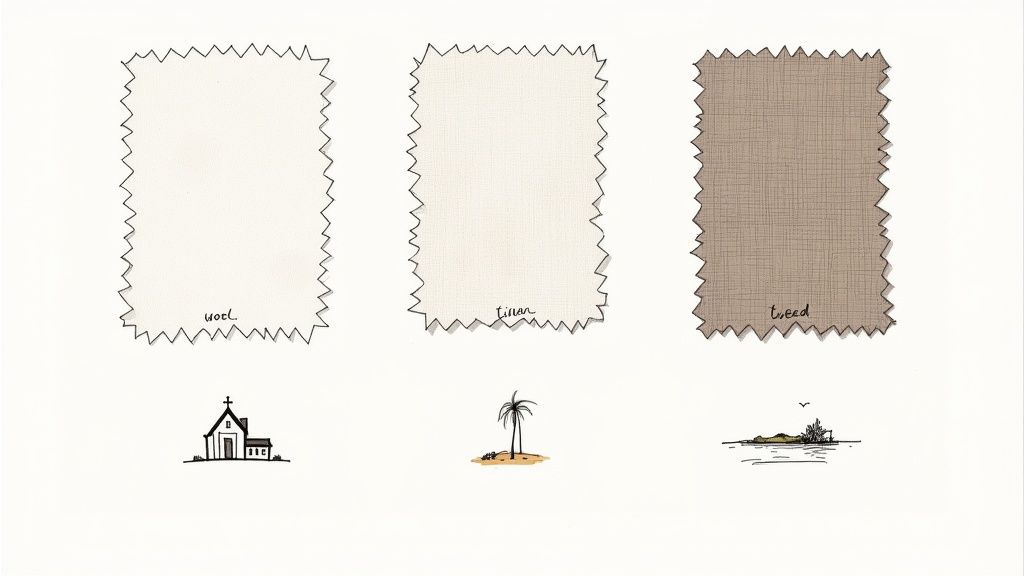
Think about it. A robust tweed suit feels perfectly at home at a crisp, autumn countryside wedding. A lightweight linen suit, on the other hand, is the only sensible choice for a breezy seaside ceremony. Each material brings its own unique character and very practical benefits, so it's absolutely essential to match your choice to the setting of your big day. This goes way beyond aesthetics; it's about comfort and performance, from the first photo to the very last dance.
Wool: Timeless Versatility for Any Season
There's a good reason wool is the cornerstone of classic men's tailoring. It’s just so incredibly versatile, making it a fantastic choice for weddings at any time of year. Forget any old ideas of heavy, scratchy material; modern worsted wools come in a huge range of weights and weaves, offering brilliant breathability and a beautiful, natural drape.
For a traditional church ceremony or a sophisticated city wedding, a mid-weight wool provides just the right amount of structure and elegance. In winter, a heavier flannel wool is your best friend, offering welcome warmth and a soft, luxurious texture. And for summer? High-twist or "tropical" wools are your answer—they’re unbelievably lightweight and resist creasing, keeping you cool and looking impeccable.
Tweed: Rustic Charm for Countryside Weddings
If you’re planning a wedding with a backdrop of rolling hills or in a beautifully converted barn, tweed is an absolutely perfect choice. This durable, woollen fabric was originally designed to stand up to the British elements, and it's just brimming with texture and character. It often features intricate patterns like herringbone or houndstooth that add a real depth to your look.
Tweed is ideal for autumn and winter weddings. It provides plenty of warmth without ever feeling restrictive, and its earthy tones lend a sense of grounded, pastoral elegance. It also pairs beautifully with other textured fabrics, adding a layer of visual interest that feels both distinguished and completely approachable.
Linen: Relaxed Sophistication for Warmer Climates
For a destination wedding in a sun-soaked paradise or a celebration in the height of summer, linen is the absolute go-to. Made from the fibres of the flax plant, it’s exceptionally lightweight and breathable, letting air circulate freely to keep you cool. Don't worry about the wrinkles—that natural tendency to crease is part of linen's charm, giving you a relaxed, effortlessly stylish look.
While a full linen suit is spot-on for a casual beach setting, a linen-blend—often mixed with wool or silk—can give you the best of both worlds. These blends keep linen’s cooling properties but help reduce creasing and add a little more structure, making them a great fit for slightly more formal warm-weather events. For more inspiration, have a look at our guide on finding the perfect suits for a beach wedding.
The right fabric does more than just look good; it adapts to your environment. It’s the invisible element that ensures your comfort and confidence, allowing you to focus entirely on the moment.
To help you navigate these choices, here’s a quick-reference guide.
Wedding Suit Fabric Seasonal Guide
Fabric
Best Season
Formality Level
Key Characteristic
Worsted Wool
All Year
High
The versatile workhorse; drapes beautifully and comes in many weights.
Tweed
Autumn/Winter
Semi-Formal
Rich texture, durable, and perfect for a rustic or countryside theme.
Linen
Summer
Casual/Semi-Formal
Extremely breathable and lightweight; prized for its relaxed look.
Mohair
Spring/Summer
High
Has a crisp feel and subtle sheen; very wrinkle-resistant.
Cashmere Blend
Winter
Very High
Incredibly soft and luxurious, offering exceptional warmth.
Velvet
Autumn/Winter
Formal (Black Tie)
Opulent and rich in colour; perfect for an evening statement jacket.
This table should give you a solid starting point, but remember, the best way to choose is always by feeling the cloth yourself.
Exploring Other Luxurious Options
Beyond the big three of wool, tweed, and linen, there’s a whole world of exquisite fabrics waiting to make your wedding suit truly unique. Each has its own special qualities.
Here are a few more to consider:
Mohair: Sourced from the Angora goat, mohair has a distinct lustre and a crisp feel. It’s incredibly resilient, resists wrinkling like a champion, and is an excellent choice for a sharp, formal suit that needs to look perfect all day long.
Cashmere: Famous for its incredible softness and luxurious feel, cashmere can be blended with wool to create a suit that is both supremely comfortable and elegantly refined. It's an ideal choice for a truly special winter celebration.
Velvet: If you want to make a bold, opulent statement—especially for an evening or black-tie wedding—a velvet dinner jacket is a magnificent choice. Its rich pile and deep colour saturation create an unforgettable, sophisticated look.
Ultimately, choosing a fabric is a tactile, personal experience. It's about feeling the different cloths, seeing how they catch the light, and imagining how each one will contribute to the most important outfit you may ever wear.
Designing the Look for the Groom and Groomsmen
With the perfect cloth chosen, we move on to the really exciting part: shaping the character of the suit itself. This is where we translate your personal style and the wedding's theme into the actual design details. Think of a custom suit for your wedding as a blank canvas; the choices we make now—lapels, buttons, pockets—are the brushstrokes that will turn it into a masterpiece.
Our goal here is twofold. First, we need to create a suit that is an authentic reflection of you. Second, we want a cohesive look for the entire wedding party, one where the groom's outfit remains the clear focal point while still harmonising with his groomsmen. It’s a delicate balance, much like arranging a floral centrepiece—every element works together, but there’s always one star of the show.
Defining the Suit's Silhouette
The overall shape and style of your suit jacket come down to a few key decisions. These choices set the tone for the entire outfit, dictating whether it feels formal and traditional or lean and contemporary.
Lapel Style: The lapel is arguably the most defining feature of a jacket. The notch lapel is the versatile, can't-go-wrong classic, suitable for most occasions. For something a bit bolder and more formal, the peak lapel, with its sharp, upward-pointing tips, adds a touch of flair and creates an illusion of height and breadth. The shawl lapel, smooth and rounded, is the most formal of the three, typically reserved for dinner jackets and black-tie events.
Button Stance: How many buttons you have and where they sit also carves out the jacket's silhouette. A two-button jacket is the modern standard, creating a clean, flattering V-shape at the chest. For an even deeper V and a sleeker feel, a one-button stance is a great option. The three-button jacket, while less common today, gives off a more traditional, almost academic vibe.
Cohesion for the Groom and Groomsmen
Creating a unified look for the wedding party doesn't mean putting everyone in the exact same uniform. In fact, it’s the subtle variations that make the groom stand out while keeping the overall aesthetic harmonious. This is where the guidance of an experienced tailor really comes into its own.
A popular and effective approach is to have the groom in a three-piece suit while the groomsmen wear matching two-piece versions. Another great way to create that distinction is for the groom to wear a unique waistcoat or perhaps a tie in a slightly different shade or texture. These small, deliberate differences ensure the groom is easily identifiable as the man of the hour, without clashing with the rest of the party. For more inspiration, our guide to crafting the groom's bespoke look is full of ideas on striking this perfect balance.
Your wedding suit is a collaboration between your vision and your tailor's expertise. The final design should feel personal, purposeful, and perfectly suited to the occasion.
We're seeing a real shift in the UK towards more considered, personality-driven wedding attire. Recent trends show a massive 191% surge in Bridgerton-style weddings celebrating romantic elegance, while the classic "old money" aesthetic has seen a 133% jump. This tells us that couples want distinctive formal wear that tells a story, making the bespoke process more relevant than ever. You can discover more insights about these evolving UK wedding trends on hitched.co.uk.
Perfecting the Finishing Touches
The smaller details are what elevate a good suit into a truly great one. These finishing touches are where the craftsmanship of bespoke tailoring really shines, offering yet more opportunities to make the suit uniquely yours.
Here are a few key elements to consider:
Pockets: Flap pockets are the standard, but jetted pockets (a clean slit with no flap) offer a sleeker, more formal appearance. For a more casual, almost sporting feel, patch pockets are an excellent choice.
Vents: A single vent at the back is the traditional British style. Double vents, however, offer greater freedom of movement and create a more flattering silhouette, preventing the jacket from creasing when you sit down.
Trouser Details: From modern, flat-front trousers to classic pleats for added comfort, the choice is entirely yours. We can also add details like side adjusters instead of belt loops for a cleaner waistline, and you can decide between a plain hem or a more traditional turned-up cuff.
Each of these choices contributes to the final story your suit tells. It’s about creating a garment that isn’t just for one day, but a timeless piece that perfectly captures the essence of your personal style.
Mapping Your Bespoke Suit Timeline
A true bespoke suit isn't something you simply buy; it's a piece you commission. Think of it less like a purchase and more like a collaboration between you and your tailor. It’s a patient, deliberate process that rewards time with absolute perfection. And getting your head around the timeline is the first step to a relaxed, enjoyable experience, making sure your suit is hanging in your wardrobe long before the big day.
One of the biggest myths we hear is that a bespoke suit can be whipped up in a few weeks. The reality is, proper craftsmanship can’t be rushed. We always advise our clients to start the journey at least 6 to 12 months before the wedding. This isn't just a buffer; it's a necessary window that allows for unhurried cloth selection, precise pattern cutting, and a series of essential fittings.
When you plan this far ahead, the process becomes a memorable part of your wedding story, not a frantic last-minute chore.
The Key Milestones in Bespoke Tailoring
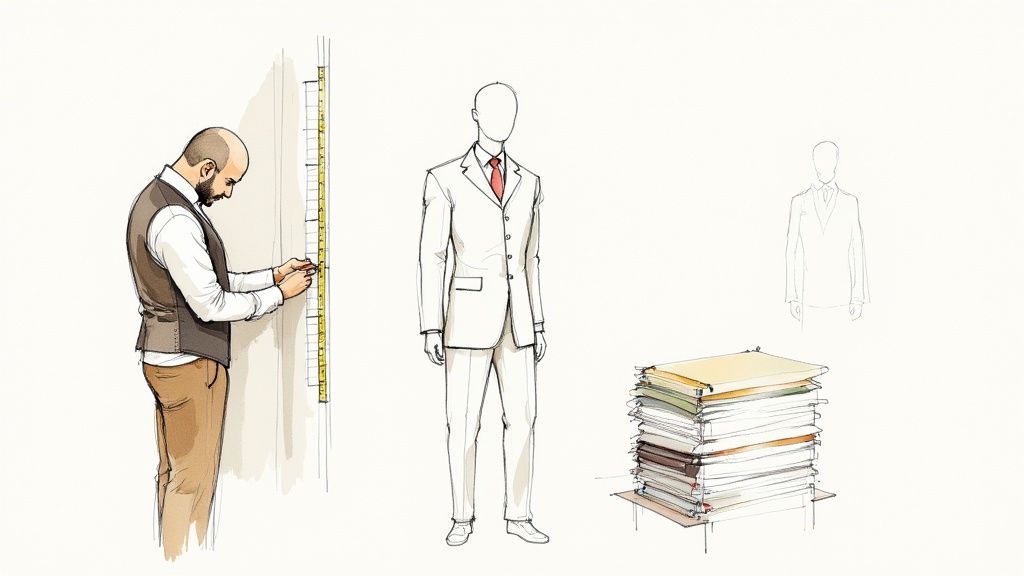
Creating your wedding suit is a structured journey with several distinct stages. Each fitting builds on the last, sculpting the cloth to your body until every line—from the shoulder to the trouser hem—is flawless.
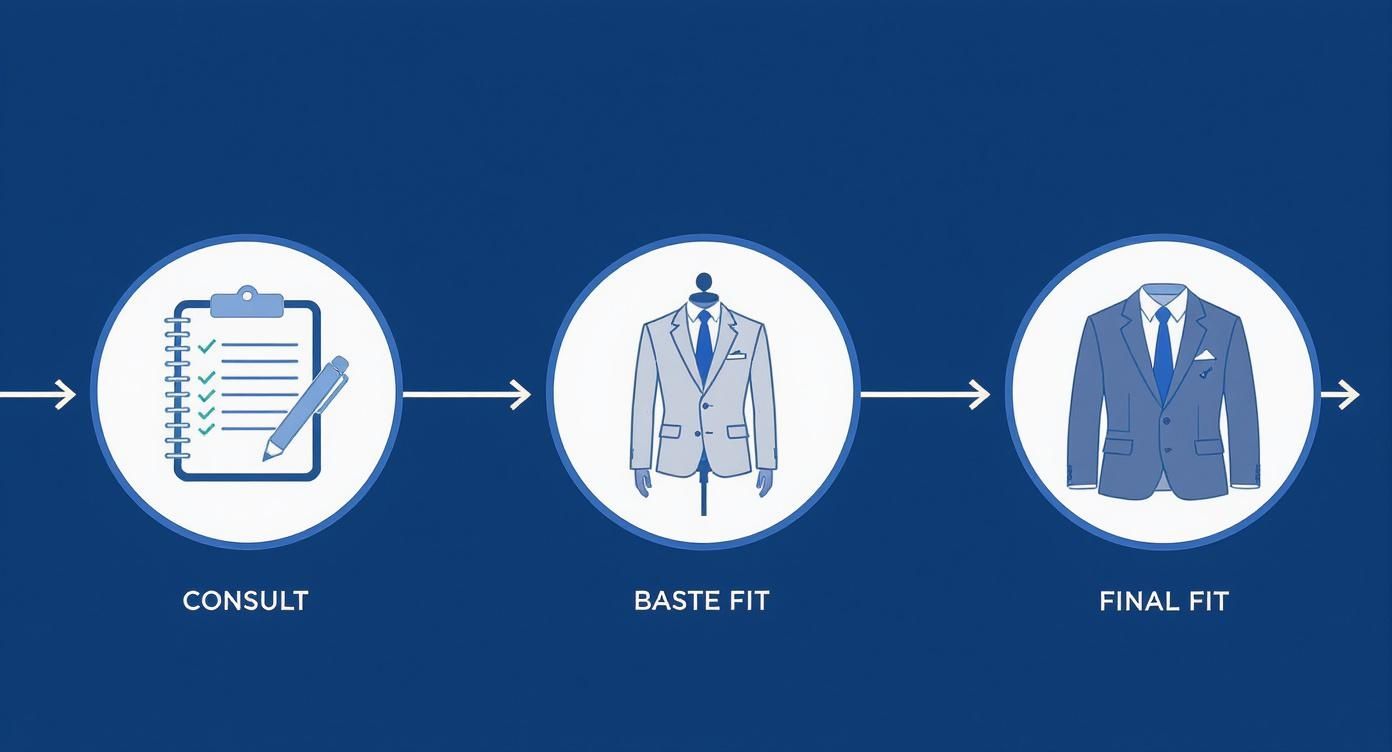
This isn't a one-and-done measurement session. It's a progressive refinement, as this little roadmap shows.
This desire for a unique, perfectly tailored wedding suit reflects a broader trend. Here in the UK, there's a huge appreciation for traditional craftsmanship, which is driving major growth in the market. In fact, the high-end suit customisation market in Europe is set to grow at a CAGR of 6.8%. The global wedding suit market alone was worth an estimated USD 1.5 billion in 2023.
Breaking Down the Fitting Process
So, what actually happens at each of these appointments? It’s far more than just running a tape measure around you; it’s an artful series of adjustments that brings the suit to life. For a really deep look into what goes on behind the scenes, you can read our complete guide on crafting your bespoke suit journey.
Here are the four key stages:
Initial Consultation and Measurement: This is where we kick things off. We’ll sit down and talk through your vision for the wedding, the venue, the overall style, and start exploring fabric options. Then, we take over 30 different measurements, which we use to hand-draft a unique paper pattern that is yours and yours alone.
The Baste Fitting (Skeleton Fit): A few weeks later, you’ll be back to try on what we call a "skeleton" of your suit. It’s loosely stitched together with temporary white basting thread. This fitting is absolutely vital. It’s our chance to nail the core structure, balance, and how the garment hangs on you before any final, irreversible cuts are made.
Second and Subsequent Fittings: After the baste fitting, we take the suit completely apart and re-cut it based on the chalk marks and adjustments we made. The fittings that follow are all about refinement. We’re dialling in the finer points—the pitch of the sleeve, how the collar sits on your neck, the precise length of the trousers. This is where the suit really starts to feel like yours.
Final Fitting and Collection: This is the moment you've been waiting for. You’ll try on the finished suit, with every detail, from the hand-sewn buttonholes to the lining, perfectly in place. We make any tiny final tweaks needed, and then you get to take home a garment that was made for no one else in the world but you.
What's a Bespoke Wedding Suit Really Worth?
When you start thinking about a custom suit for your wedding, the conversation naturally lands on price. But it's better to think of it as a long-term investment rather than just an expense for one day. A bespoke suit isn't like a hired tux or an off-the-peg number; it’s crafted to be a cornerstone of your wardrobe for years, long after the confetti has settled.
A few key things shape the final price tag. The cloth you choose is the biggest driver—rare fibres like cashmere blends will naturally cost more than a versatile worsted wool. Then there’s the design itself and the amount of hand-finishing involved, like hand-sewn buttonholes, that all add to the value of a true bespoke piece.
An Investment in Quality That Lasts
You have to understand that a bespoke suit is in a completely different league from even the most high-end designer options. A ready-to-wear suit, no matter the label, is made for a generic fit model. A bespoke suit, on the other hand, is built from the ground up, just for you. The result? Unmatched comfort, a silhouette that genuinely flatters, and a garment that’s built to endure.
The quality of construction is simply on another level. We’re talking canvassed construction, meticulous hand-stitching at key stress points, and patterns that are perfectly matched across seams. This all comes together to create a suit that holds its shape beautifully and can be altered as your body changes over a lifetime. It’s designed to last, not just to be worn once.
You’re not just buying a suit for your wedding day. You're commissioning a timeless piece of craftsmanship that will serve as a beautiful, wearable reminder of your celebration.
Breaking Down the Costs
Understanding what you’re paying for really helps you see the value. Here in the UK, the cost of wedding suits is all over the map. The average groom spends around £845 on his attire, but that figure lumps everything together, from high street finds to full bespoke commissions.
Typically, made-to-measure suits sit somewhere in the £400-£600 range, while a prestigious Savile Row creation can easily top £2,000. These figures show the different worlds of service and quality out there.
At Dandylion Style, we're all about transparency. For a much deeper look into what goes into the final figure, you can explore our detailed guide on the price of a bespoke suit.
This idea of investing in lasting quality isn't unique to suits. It’s a similar mindset to exploring the bespoke process for wedding rings, where personal meaning and craftsmanship are what truly matter. Ultimately, a custom suit is an investment in yourself and the start of your personal style legacy.
Frequently Asked Questions
What’s the real difference between bespoke and made-to-measure?
The key difference lies in the pattern. A made-to-measure suit starts with an existing template that is altered to fit your measurements. In contrast, a true bespoke suit begins with a unique pattern drafted from scratch based on over 30 of your specific measurements. This process allows for complete control over the fit, posture, and silhouette, creating a garment that is genuinely sculpted to your body. It is a one-of-a-kind creation, whereas made-to-measure is an adaptation.
How should I coordinate my suit with my groomsmen?
The goal is cohesion, not conformity. A classic approach is for the groom to wear a three-piece suit while groomsmen wear matching two-piece versions. This creates a clear distinction while maintaining a harmonious aesthetic. Alternatively, the groom could wear a unique waistcoat or a tie in a different colour or texture. These subtle variations ensure the groom remains the focal point, creating a polished and intentional look for the entire wedding party without appearing uniform.
When is the best time to start the bespoke process?
To ensure a relaxed and enjoyable experience, we strongly recommend starting the process 6 to 12 months before your wedding. This generous timeframe allows for unhurried consultations, thoughtful fabric selection, and the multiple fittings required to achieve a perfect result. True craftsmanship cannot be rushed, and this planning window eliminates any last-minute stress, guaranteeing your suit is completed well in advance of the big day. It transforms a task into a memorable part of your wedding journey.
Can I wear my custom wedding suit again after the event?
Absolutely. This is one of the greatest benefits of investing in a bespoke suit. Unlike a rented garment, your custom suit is a timeless addition to your wardrobe. By choosing a classic fabric and style, such as a versatile navy or charcoal wool, you commission a piece that is perfect for future special occasions, important business meetings, or formal events. It’s not just an outfit for one day but a cornerstone garment that will serve you well for years to come.
About the Author
Igor is the founder of Dandylion Style, a bespoke tailoring studio born from his lifelong passion for classic menswear and an absolute dedication to true craftsmanship. He started the studio to bring a genuinely personal and luxurious tailoring experience to gentlemen across the UK, from the heart of London to the Sussex countryside.
His philosophy is simple: a suit is far more than just clothing. It’s a powerful form of self-expression and the ultimate mark of a significant moment, especially when it’s a custom suit for a wedding.
Every single garment that leaves the studio has Igor's expertise and commitment to perfection woven into its very fabric. He personally ensures that each client not only looks their absolute best but feels confident and truly themselves—on their wedding day and for all the years that follow. His guidance is the cornerstone of the Dandylion Style experience.
Ready to create a suit as unique as your celebration? At Dandylion Style, Igor provides a personal, unhurried tailoring experience to ensure you look and feel exceptional on your wedding day. Book your consultation to begin the journey.
Igor is the founder of Dandylion Style, a tailoring house built on the simple, deeply held belief that a suit should be like a second skin—a true extension of a gentleman’s personality. For Igor, tailoring isn't just about cutting cloth; it's an art form dedicated to creating unique, perfectly fitted attire for the discerning man. His passion is rooted in classic sartorial traditions, yet he maintains a keen eye for contemporary style, ensuring his creations are both timeless and relevant. This approach has cemented his reputation for genuine craftsmanship and a truly personal service.
Key Takeaways The Core Two: Navy blue and charcoal grey are the essential, non-negotiable suit colors for any professional wardrobe. Navy offers versatility and approachability, while charcoal projects authority and seriousness. Context is Crucial: The best suit color...
When you find a piece of clothing you absolutely love, getting the fit just right is the final, transformative touch. But how much should you expect to pay? In the UK, alteration costs can be as modest as £15 for a simple trouser hemming, or climb to £150 and beyond...
Getting the right pink shirt and tie combination is the mark of a well-dressed man. It’s a detail that separates the novices from those who truly understand their wardrobe. For a look that’s classic and can’t miss, pair your pink shirt with a navy, grey, or burgundy...
Key Takeaways For those seeking a quick overview, this section summarises the essential rules and recommendations for incorporating turn-up trousers into your wardrobe. Sartorial Purpose: Turn-ups add weight to the trouser hem, ensuring a cleaner, sharper drape,...
Deciding what colour tie to wear with a pink shirt is a common style query I hear from clients. For a classic, professional look that never fails, your safest and most effective choices are navy blue and charcoal grey. If you're heading to a more contemporary or...
You've just picked up a newly finished bespoke suit, and the cloth still has that clean, disciplined line only a real fitting room can give it. The temptation is to put it straight in the wardrobe and trust the label to do the rest. That's where expensive...
Book Your Tailoring Consultation
Looking for a suit or garment made specifically for you?
At Dandylion Style, we create bespoke and made-to-measure
garments tailored to your individual shape, style and occasion.
From suits and shirts to dresses, waistcoats and alterations,
our experienced tailors can help you create something truly unique.