You're probably at one of two points. Either you've put on enough off the peg and made-to-measure suits to know something still feels slightly off, or you've got an important date in the diary and don't want the jacket to pull, the collar to gap, or the trouser break to collapse over the wrong shoe.
That moment is where bespoke suit measurements stop being a list of body dimensions and start becoming a craft exercise. A proper bespoke fitting reads the body as it is, not as you wish it looked in the mirror five seconds before the tape goes on. Posture, stance, shoulder balance, heel height, and how you naturally carry yourself all matter as much as chest or waist size.
In Britain, that matters even more with formal and business tailoring, where cleaner lines and a controlled trouser break leave less room for measurement laziness. A gentleman standing too tall for the tape or wearing the wrong shoes can throw off the finished silhouette before the cloth is even cut.
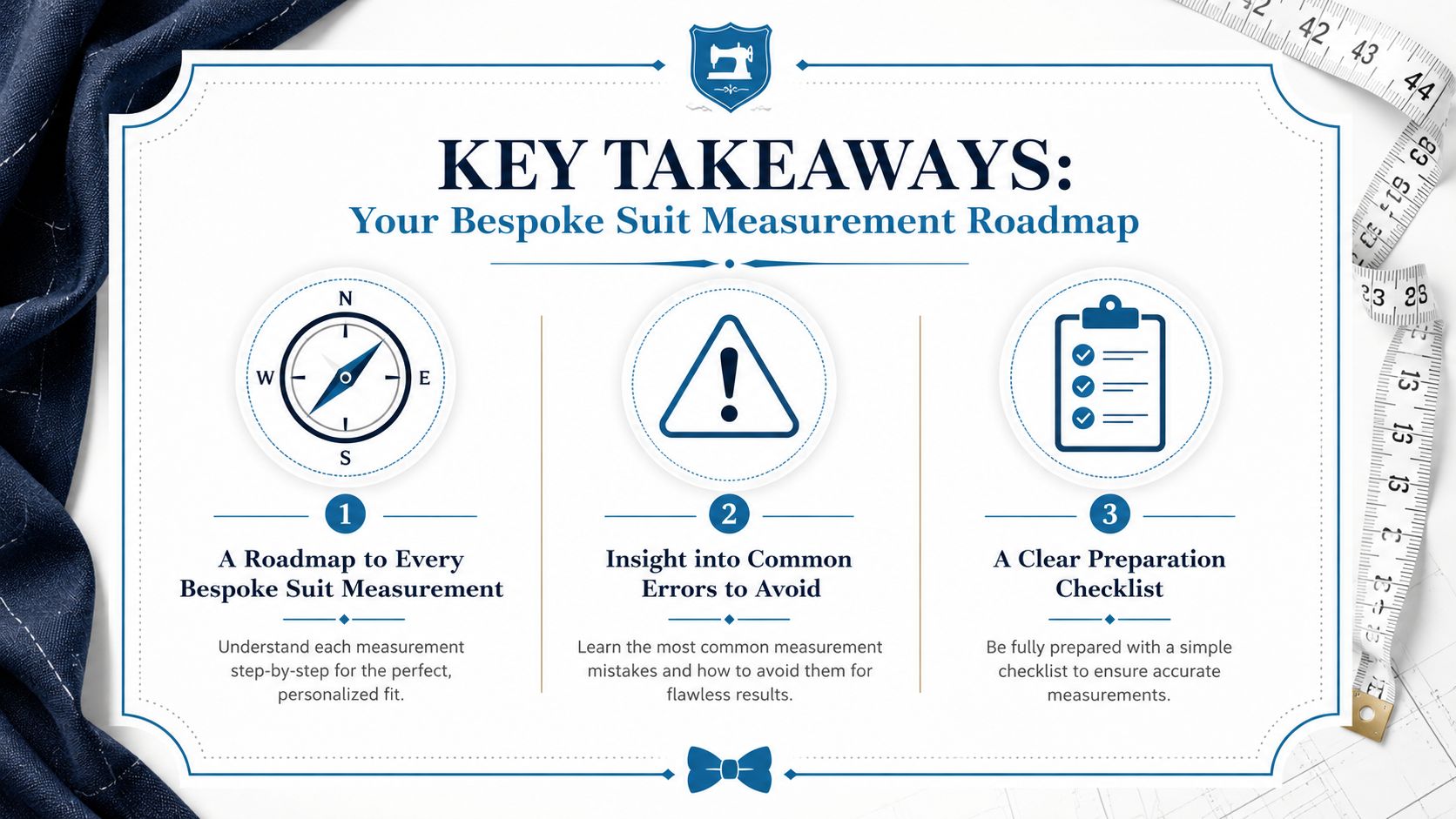
Key Takeaways
- Bespoke suit measurements are more than chest and waist. A proper process accounts for posture, body shape, movement, and how the garment should sit when you stand, walk, and sit.
- Precision is tight. For bespoke tailoring, measurements need to be accurate to within 1/4 inch (0.5 cm) to protect structure and comfort, as noted in Nathan Tailors' measuring guide.
- Bespoke and made-to-measure aren't the same exercise. True bespoke starts with a fresh paper pattern cut for the individual client rather than an adapted house block.
- Footwear changes trouser measurements. British dress shoes alter break and hem behaviour in ways trainers don't replicate.
- Posture can spoil otherwise careful measuring. If a client stiffens up or poses, the tape records a performance rather than the body he lives in.
- Preparation helps. Wear the right shirt, bring or wear the intended shoes, stand naturally, and don't chase a flattering number on the tape.
- Fittings matter as much as first measurements. The initial figures start the process. The fittings refine it.
A good measurement session gives you three things at once. It gives the cutter hard dimensions, it reveals where the body departs from symmetry, and it establishes style intent. Those three have to agree. If they don't, the suit may be technically correct on paper and still wrong on the body.
Introduction to Bespoke Suit Measurements
A gentleman walks into a Sussex studio thinking he needs “a 40 regular with a bit taken in”. Ten minutes later he realises that what he needs is someone to notice that one shoulder sits lower, that he stands differently when relaxed than when observed, and that the shoes for his wedding trousers have a very different heel from the loafers he wore to the appointment.
That marks the true beginning of bespoke suit measurements.
A proper bespoke process isn't just about recording size. It's about translating a living body into a pattern that can be cut, balanced and refined. In the British tradition, that usually means paying close attention to posture, shoulder slope, neck position, seat shape, trouser line and break. It also means separating bespoke from made-to-measure in honest terms. If you want a clear definition of that distinction, Dandylion Style's explanation of what bespoke tailoring is lays out the difference between a garment built from scratch and one adjusted from an existing block.
Why the tape measure only tells part of the story
Two men can share the same chest and waist measurements and need completely different coats. One may carry himself erect, with the chest forward and seat flatter. Another may have a rounder back, slightly forward shoulders, and a different balance through the skirt of the jacket. The raw number doesn't explain that. The cutter's notes do.
Practical rule: If you have to “stand properly” for a measurement, you're probably already standing wrongly.
The same problem appears in trousers. Many guides treat inseam and outseam as though they exist in a vacuum. They don't. Trouser length only makes sense with the right shoe, the right rise, and a clear decision about break.
Where clients usually go wrong before measuring begins
Most errors happen before the first figure is taken. Gentlemen suck in the waist, square the shoulders, tilt the chin, or wear footwear that has nothing to do with the finished suit. They're trying to help. In practice, they're feeding the tailor false information.
That's why accurate bespoke suit measurements depend on calm observation as much as on technical method. The best measurements come from an ordinary stance, ordinary breathing, and the clothing you'd realistically wear with the suit.
Step by Step Measurement Guide
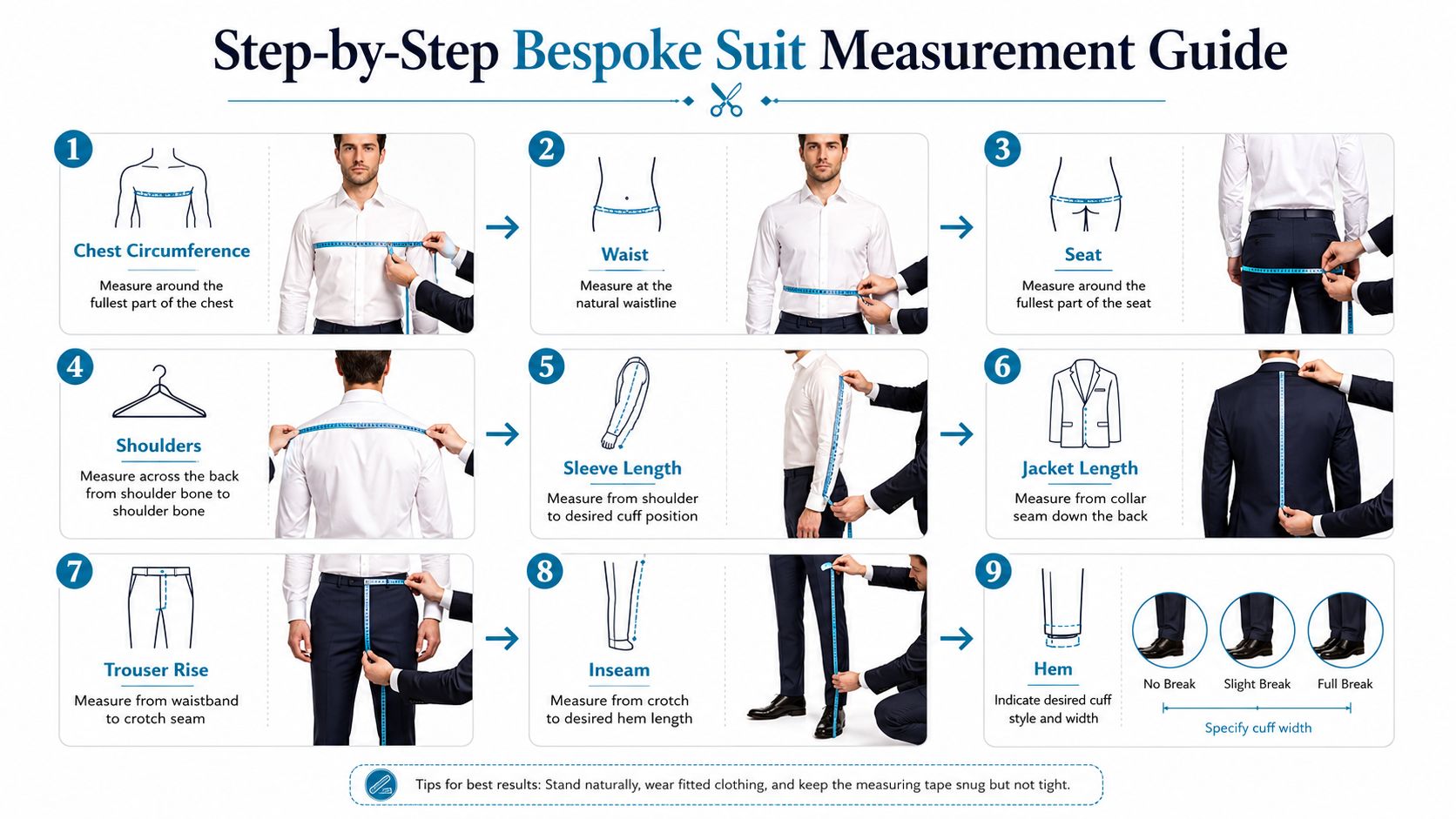
When taking bespoke suit measurements, use a soft sewing tape, keep it level, and record what the body does naturally. Don't pull the tape tight to chase a smaller number. Don't let it sag to buy extra comfort later. If you're checking your own dimensions against a professional template, a suit measuring chart from Dandylion Style is useful for naming each point consistently.
According to That British Tweed Company's measuring guide, UK bespoke standards place the chest at the widest point under the armpits and over the shoulder blades, the neck at collar height, the sleeve from shoulder bone to knuckle, and the inseam from crotch to floor without shoes, while noting that most men's chest measurements fall between 18 and 21 inches and a standard chest-to-waist drop is about 15 centimetres.
Upper body measurements
Start with the neck. Measure at collar height, not lower down the throat. The tape should sit snugly but not pinch. If you're checking an existing shirt collar, measure from the middle buttonhole to the centre collar button with the collar laid flat.
For the chest, wrap the tape around the widest part, under the armpits and across the shoulder blades. This point matters because many men instinctively slide the tape too high, which shortens the front chest and can produce a jacket that feels tight when buttoned.
Take the waist at the natural waistline, not where modern trousers happen to sit. If the client wears trousers lower than his natural waist, note both. The pattern needs the anatomical waist, but the wearing position affects comfort and line.
The seat should be taken around the fullest part. Stand naturally with the heels in a comfortable position. If the client clenches the seat or locks the knees, the reading changes and the trousers often bind later across the back.
Shoulders, back and sleeve
Shoulder measurement sounds simple, but it isn't. Measure across the back from shoulder bone to shoulder bone while observing shoulder slope and whether one side sits lower. That observation can matter more than the number itself.
For sleeve length, take the measure from the shoulder bone down to the knuckle or thumb base, depending on the convention you're following and the intended shirt exposure. A man who carries one arm slightly bent at rest may need the cuff balanced differently on each side.
A sleeve that looks equal on paper can still look uneven once the client drops into his natural stance.
Back balance is one of the least understood parts of bespoke suit measurements. A client with a round back often needs extra allowance through certain points, while an erect posture needs a different distribution. In true bespoke work, posture notes sit beside the measurement sheet because numbers alone won't solve the balance.
Jacket length and body proportion
Jacket length is part measurement and part judgement. You're measuring a body, but you're also deciding what line flatters it. A shorter coat can sharpen a modern silhouette. A little more length can steady the proportions on a taller or longer-torsoed man.
Use a stable reference point at the collar seam and measure down the back. Then look at the whole figure. If the man has prominent hips, a fuller seat, or shorter legs relative to the torso, the visual balance may need correcting in the draft rather than in the tape reading.
Here's a practical reference table.
| Measurement | How to take it | What often goes wrong |
|---|---|---|
| Neck | At collar height, snug not tight | Tape sits too low |
| Chest | Widest point, under armpits, over blades | Client expands chest unnaturally |
| Waist | Natural waistline | Measured at trouser position only |
| Seat | Fullest part of seat | Knees lock, seat clenches |
| Shoulders | Bone to bone across the back | Slope and asymmetry ignored |
| Sleeve | Shoulder bone to knuckle area | Arm posture changes result |
| Jacket length | Collar seam down back | Purely formulaic choice |
Trouser rise, inseam and hem
Trouser measurements are where footwear and posture start to expose weak measuring habits.
For rise, use a pair of trousers that fits well in that area and measure from the crotch seam, where the four seams meet, straight up to the top of the front waistband, following the method described in Dandylion Style's trouser measuring guide. This is one of the clearest ways to understand where the client is comfortable wearing his trousers.
For inseam, measure from the crotch seam down the inside leg. Keep the tape taut but not pulling. If you're measuring on the body rather than from a garment, make sure the client stands naturally and doesn't spread the feet too wide.
The hem is not just a circumference. It's a style decision linked to shoe shape, break, cloth weight, and whether the client wants a cleaner or fuller line. A narrow hem paired with a broad formal shoe can behave very differently from the same hem over a sleek Oxford.
Dynamic notes that separate bespoke from approximation
In UK bespoke tailoring, the measurement method can include 50 distinct static and dynamic data points, while made-to-measure often uses 20 to 30 measurements. Savile Row cutters record nearly 50 measurements at the initial consultation, with further data at the forward fitting, and full dynamic profiling is associated with a 15 to 20% higher success rate in fit accuracy for bespoke versus made-to-measure, according to GQ's discussion of Savile Row tailoring.
That extra information matters because the body moves. Shoulders ease differently in motion. Posture changes when sitting. One hip may drive the trouser line more than the other. Bespoke suit measurements work when the tape reading and the observation are recorded together.
Common Pitfalls and Fit Preference Adjustments
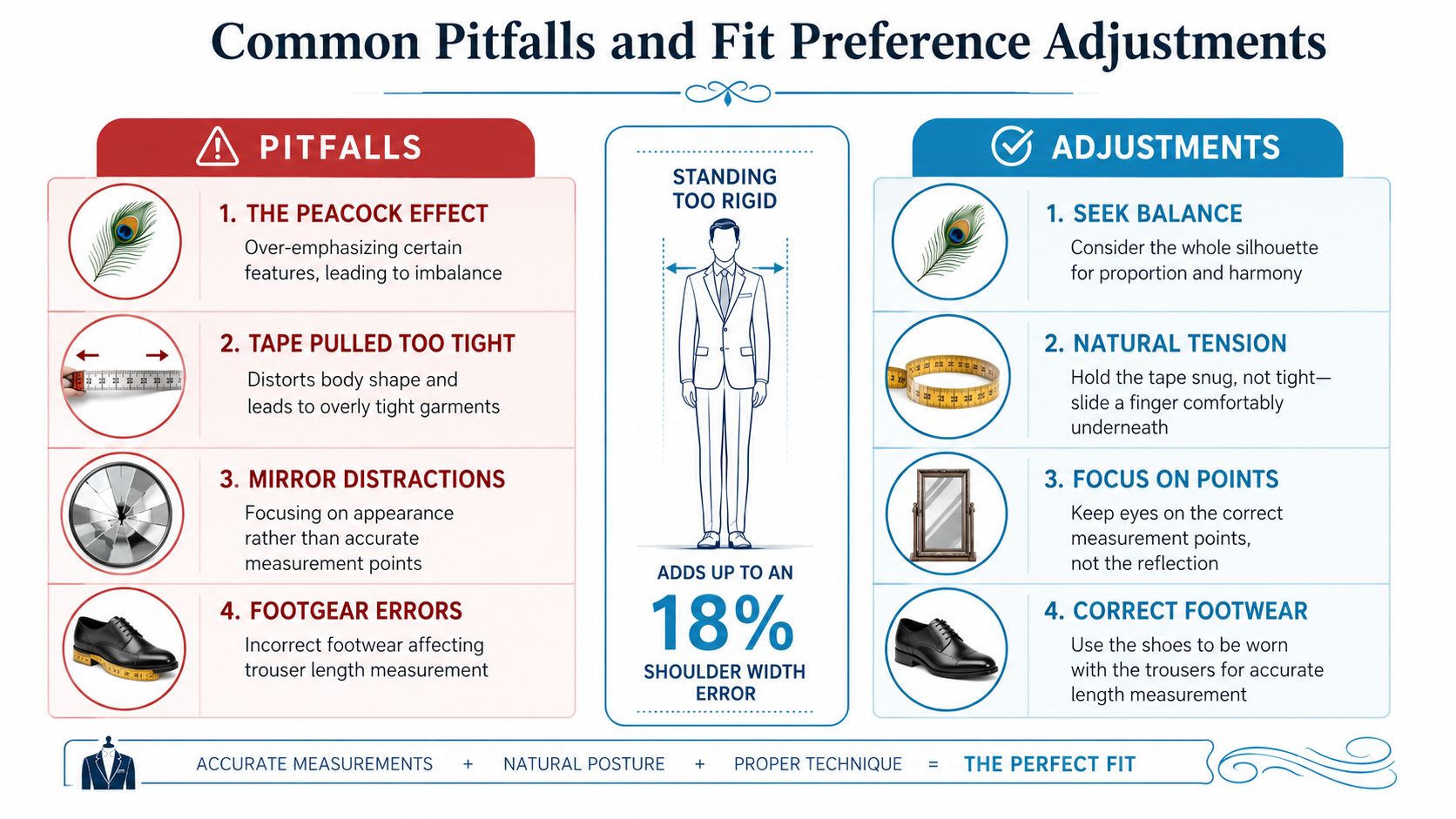
The biggest mistakes aren't dramatic. They're small distortions that compound. A lifted chest, a pulled tape, a glance in the mirror, the wrong shoe. Each one nudges the pattern away from the body you inhabit.
According to The Gentleman's Journal on Savile Row measuring practice, the peacock effect occurs when clients stand unnaturally rigid or exaggerated during measuring, causing a 12 to 18% deviation in chest and shoulder width accuracy, and failure to account for shoe height and natural posture results in a 30% higher rate of post-completion alterations.
The peacock effect
This is the classic problem. The client sees the tape, straightens like a guardsman, broadens the chest and pins the shoulders back. The tailor no longer has his everyday posture. He has a temporary performance.
The cure is simple, though not always easy. Look away from the mirror. Breathe normally. Let the arms hang as they usually do. If the client tends to pose every time the tape comes near his chest, stop talking about numbers and start observing him while he moves naturally between positions.
Don't measure the man at attention if he lives at ease.
Tape tension and false neatness
Some clients think tighter measuring means sharper tailoring. It doesn't. A tape drawn too firmly can flatten the body and hide where ease is needed. The finished garment then feels restrictive across the chest, waist, seat, or thigh.
Use the tape firmly enough to define the point and loosely enough to respect the body's shape. Bespoke isn't body shrink-wrapping. It's controlled allowance placed with judgement.
A quick correction drill helps:
- Stand and reset: Drop the shoulders, unclench the jaw, and exhale before each key measurement.
- Check tape contact: The tape should touch the body consistently without digging in.
- Repeat disputed points: If a figure looks suspiciously trim, take it again after a brief walk around.
Footwear mistakes and UK trouser break
In Britain, this is one of the most neglected parts of bespoke suit measurements. Generic guides often assume any shoe will do. It won't. Formal leather shoes change how the trouser falls, where it breaks, and how the cuff clears the heel.
Oliver Wicks' guide to measuring for a suit notes an underserved gap around footwear and posture in UK trouser measuring, including the fact that bulkier footwear can alter the critical cuff-to-heel measurement by up to 2 cm, and that a medium break of 1.5 inches is a common business reference point that still depends on the actual heel height of the shoe being worn.
For a home fitting or self-measurement, wear the shoe you mean to wear with the suit, or one very close to it. Trainers give the wrong pitch, wrong bulk, and wrong visual finish.
Adjustments for preference, not just anatomy
Fit isn't only correction. It's preference.
A man with fuller shoulders may want a little more ease for drape and movement. Another may prefer a cleaner waist suppression but extra room through the seat. Someone with an athletic build may need sleeves set to look balanced when the arms rest slightly away from the body. A more casual suit can tolerate a different sleeve and trouser attitude from a sharp city business suit.
If you want to understand one of the areas clients most often misread visually, this guide to suit shoulder fit helps identify when the issue is measurement, posture, or cut.
Conclusion and Next Steps
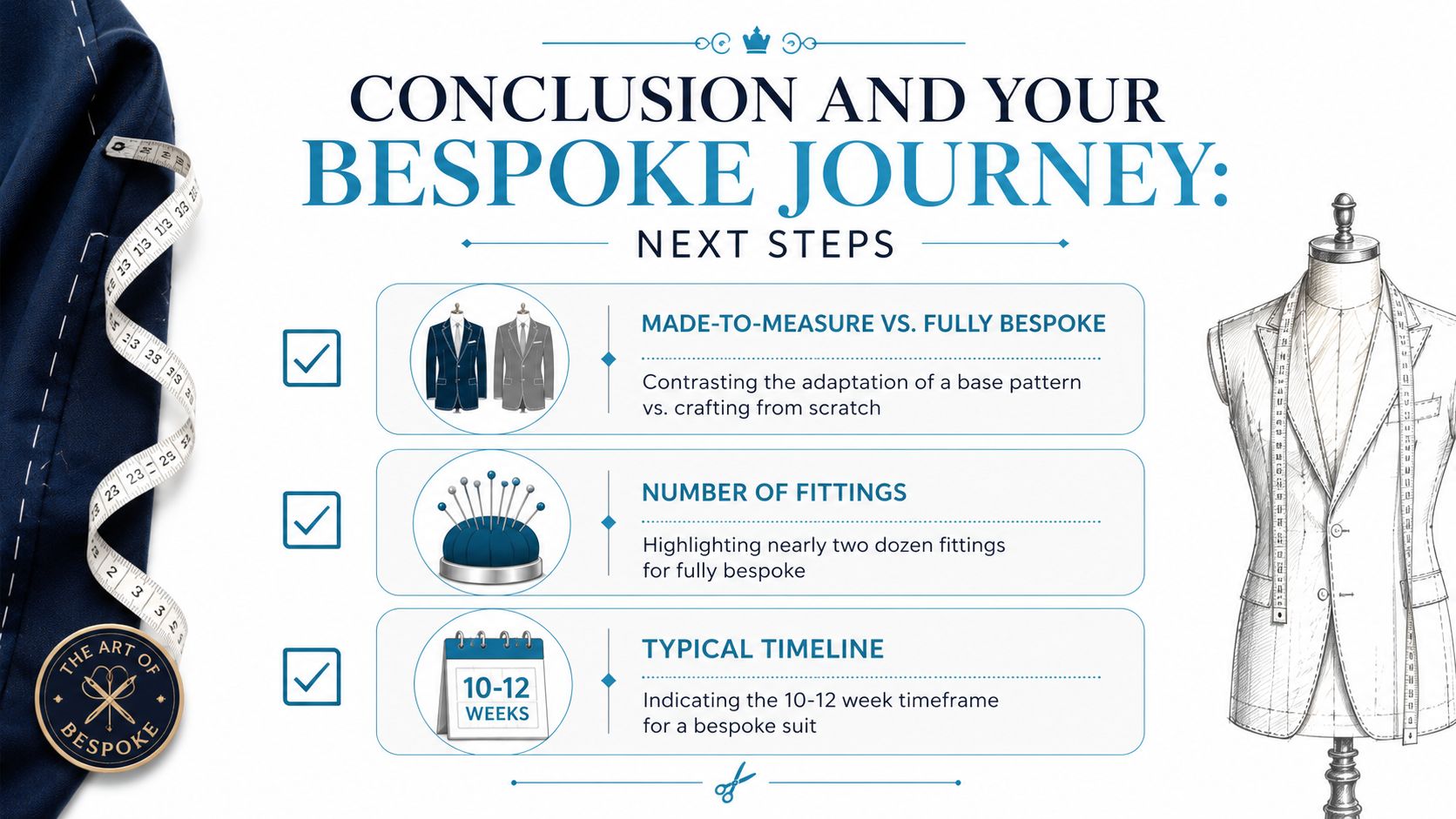
Bespoke suit measurements only make sense when you see them as the beginning of a pattern-making process, not the end of one. A reliable first session gives the cutter a map. The fittings test that map against reality.
In true bespoke tailoring, that distinction is decisive. Dandylion Style's explanation of tailor-made suits states that a genuine bespoke process requires a unique two-dimensional paper pattern cut from scratch for each client, detailed notes on posture and body shape, and typically two to three fittings over a 10 to 12-week timeline, which is what separates it from made-to-measure's adjusted base pattern. The same source also notes that certain posture differences, such as an erect versus round back, may call for adding about half an inch to specific measurements for the fit to work properly.
What works better than chasing perfect numbers
Clients often assume the mission is to produce a flawless measurement sheet on day one. That's not quite right. The aim is to produce an honest measurement sheet, followed by fittings that refine it. If the first figures are clean but dishonest because the client stood differently, the process starts crooked.
That's why good bespoke practice values notes as highly as numbers. Is the right shoulder lower. Does the client stand back on the heels. Does the seat project. Does he wear his trousers lower than his anatomical waist. These details shape the pattern.
A practical preparation checklist
Before a fitting, do the simple things that preserve accuracy.
- Bring the right shoes: If the suit is for business, wedding, or black tie wear, bring the formal leather shoes you expect to use.
- Wear light clothing: A proper shirt and light underlayers help the tape sit correctly.
- Stand as you normally stand: Don't brace, suck in, or perform “good posture”.
- Mention old fit issues: Collar gap, sleeve twist, tight seat, or trouser pooling all give the cutter useful clues.
- Know your preference: Say whether you want a cleaner line, more drape, more room when seated, or a stronger trouser break.
The most useful client isn't the one who knows tailoring jargon. It's the one who describes honestly how his clothes misbehave.
Bespoke, made-to-measure and the trade-off
Made-to-measure can work well for many men. It's faster, simpler, and based on adapting an existing pattern. Bespoke asks more of everyone involved. It demands a fresh draft, close observation, and fittings that reshape the garment around the body.
Neither route is automatically right for every wardrobe. The question is how exact the fit needs to be, how unusual the posture or build is, and how much control you want over the final line. Men with noticeable asymmetry, strong preference on trouser break, or recurring jacket balance problems usually benefit from the deeper reading bespoke provides.
For clients who can't always attend a studio appointment, services such as home or office fittings can still work well if the measuring conditions are disciplined. Dandylion Style, for example, offers studio, home, office and remote appointments, which is useful when the same care is applied to shoe choice, stance, and communication about fit preferences.
How measurements affect style decisions
Every measurement has a visual consequence.
A slightly higher rise can steady the line of the jacket and trousers together. A lower rise can feel more contemporary, but it needs to be balanced carefully so the jacket doesn't look top-heavy. Sleeve length changes the visible shirt cuff and therefore the formality of the whole coat. Trouser hem width affects how the cloth hangs from knee to shoe. Shoulder balance changes whether the jacket looks composed or slightly troubled, even when the wearer can't say why.
That's why bespoke suit measurements should never be treated as a clerical exercise. They are style decisions disguised as numbers.
What to expect from the process
Expect conversation. Expect to stand, walk, turn and sit. Expect the tailor to ask about how you wear your clothes, not just your size. Expect at least one point where what you thought was your issue turns out to be a consequence of something else. A sleeve problem may start at the shoulder. A trouser break problem may begin with the shoe.
Most of all, expect refinement rather than instant perfection. Bespoke earns its reputation because the process leaves room for correction, judgement and adjustment. That's what makes the finished garment feel settled on the body instead of merely fitted to it.
FAQ
Should I wear my dress shoes when taking trouser measurements at home
Yes. Trouser length, break and hem behaviour depend heavily on the shoe that will sit under the cloth. Formal leather shoes create a different pitch and silhouette from trainers or casual loafers. If you measure in the wrong footwear, the figures may still be neat, but the finished trouser line often won't be. Home measuring works far better when the shoes, socks and intended trouser style are all decided before the tape comes out.
Can bespoke suit measurements still work if my posture changes when I'm nervous
They can, but only if you make a conscious effort to relax and the tailor watches how you stand when you forget you're being measured. Nervous clients often lift the chest, lock the knees or pull the shoulders back. That creates false readings. A good session includes pauses, repeat checks and observation in motion, because your everyday stance is what the garment has to live with.
Is bespoke always better than made-to-measure
Not automatically. Bespoke is better when your body shape, posture, or fit preferences need a pattern built around you from the start. Made-to-measure can still be a sensible route when your proportions are relatively straightforward and the style brief is simpler. If you're weighing the difference carefully, this bespoke suit vs made-to-measure guide gives the comparison in practical terms rather than marketing language.
About the Author
Igor is the founder of Dandylion Style and the tailor behind its bespoke work in Ardingly, West Sussex. His approach is grounded in careful observation, calm fittings and honest guidance about cloth, cut and wearability. He works with clients across Sussex, London and the South East, including home and office appointments, with a focus on garments that feel personal and composed rather than overstated. More about his background and tailoring philosophy is available on Igor's author page.
If you're ready to turn measurements into a suit that reflects your posture, proportions and style, speak with Dandylion Style about a studio, home or office fitting.